Bolingbrook Epoxy Flooring brings more than 20 years of epoxy flooring to Worth, and much of the commercial work we are asked about here is a floor under a styling chair, a shampoo bowl or a grooming table. Those floors live with color, solvent and water every working day, so the coating has to be chosen for that mix rather than picked off a garage sample board.
A salon or grooming floor is also a floor that has to stay in service. Owners tell us the same thing in different words: the shop cannot sit closed for a week while a coating cures. We plan the job around the hours the shop actually keeps, including overnight and weekend windows, and we say up front how long each stage needs before chairs and carts roll back in.
Before any of that, we look at what is already down. Cracks, joints and old tile or coating tell us more about the job than the square footage does, and if a slab needs repair before it can be coated, the quote says so in plain words.
A Worth salon starts at the village board
Worth treats a beauty parlor as a special use. That means a new salon, or a salon changing hands, does not simply sign a lease and open; the request goes to the village’s Real Estate Development Board and then to the village board for an ordinance. For a floor contractor, that review shapes when the work can happen and what kind of job it is likely to be.
Approvals on 111th Street and Harlem Avenue
The board’s May 19, 2026 minutes record Ordinance 2026-14, a special use permit for a beauty parlor at 7010 W. 111th Street, recommended by the Real Estate Development Board as a change of ownership. The business license that went with it was made contingent on passing all inspections. The June agenda carried another special use ordinance for a beauty parlor at 6969 W. 111th Street.
Harlem Avenue showed up on the August 18 agenda. It listed a special use for a beauty parlor at 11015 S. Harlem Avenue, Unit G, a hair-braiding business, and a special use for a pet grooming facility at 11324 S. Harlem Avenue. Both business licenses on that agenda were again listed as contingent on passing all inspections.
A pause on new shops, and what it leaves
The same August agenda took up Ordinance 2026-28, a temporary moratorium on barbershops, beauty parlors and tattoo studios in the B1 and B2 zoning districts. We have read the agenda item, not an adopted ordinance, so we do not know whether it passed or how long it would run. Ask the village before you plan around it either way.
What it does suggest is where the floor work in Worth is likely to come from. If new salon openings in those districts slow down, the steadier job is an existing shop being refitted, often by a new owner who wants the space to look like theirs before reopening.
Refitting under a new owner
A change-of-ownership refit usually means pulling up whatever the last tenant left. That might be vinyl tile with old adhesive, a worn paint coating or a previous epoxy that has started to peel at the sinks. Every one of those comes off before we put anything down, because a new coating bonds to the slab or it fails with the old layer underneath it.
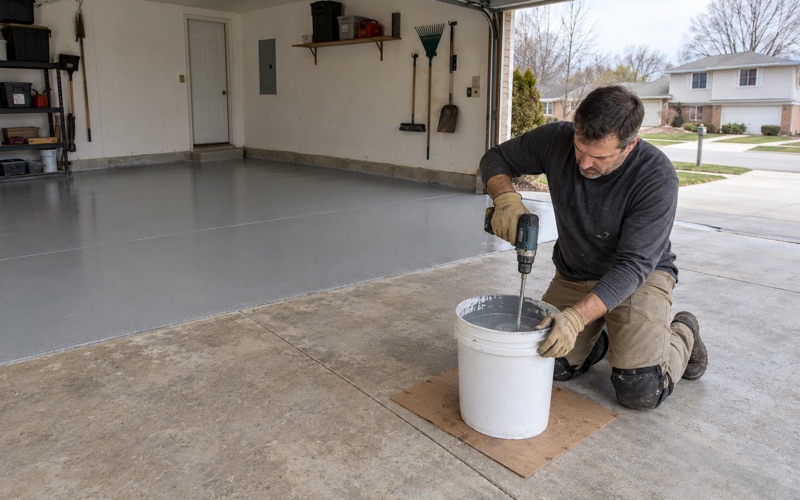
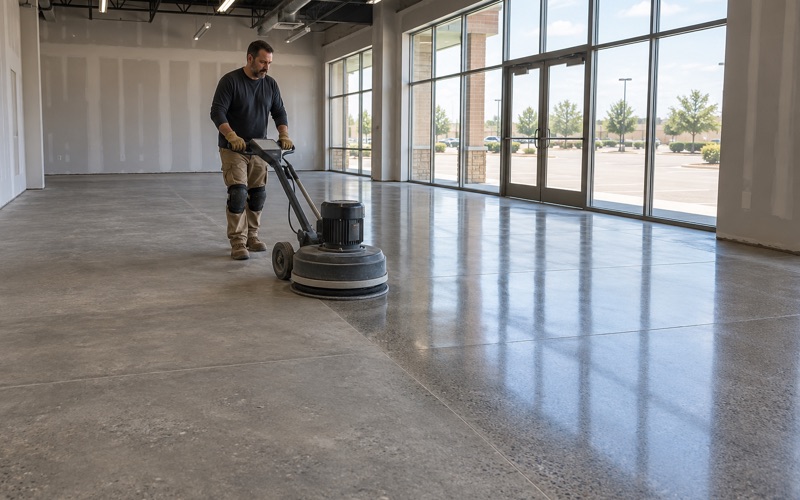
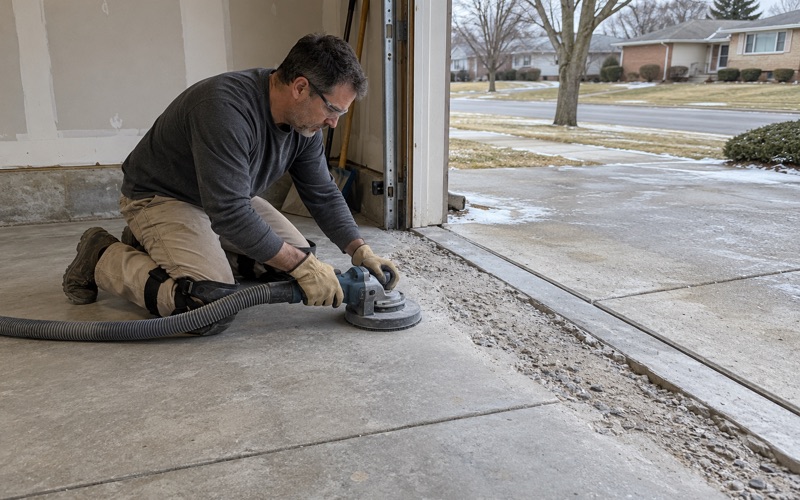
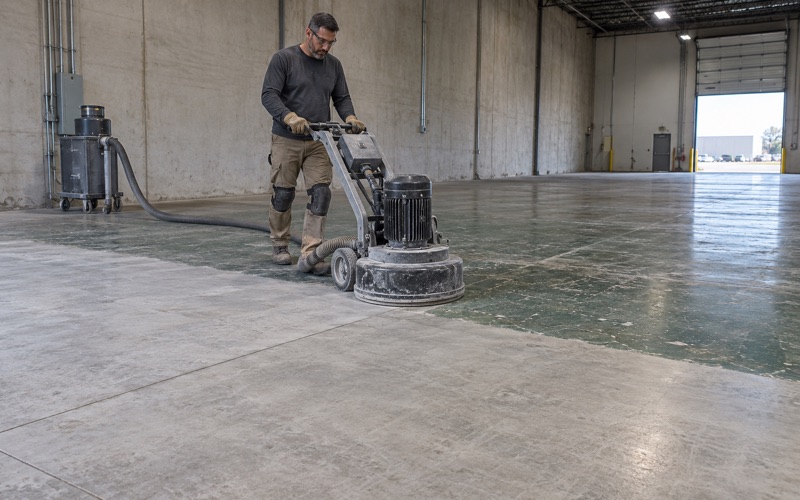
We open the concrete mechanically with a diamond grinder or a shot blaster to an ICRI CSP profile that suits the system, and we do not acid etch. Grinding dust is collected at the grinder, never washed toward a floor drain. Our proposal names the product, the system build and the finished thickness, so a new owner can hold the quote against the floor that went down.
Looking for epoxy-flooring closer to Brookfield? See Epoxy-Flooring in Brookfield.
Hair color, bleach and acetone on a floor
A salon floor takes a slow, constant drip of products that were designed to change the color of things. Most of the damage we see on worn salon floors is not wear from foot traffic. It is staining and softening from what lands on the floor and sits there until closing.
Dyes, developer and lightener
Permanent hair color is made to penetrate, and a porous surface lets it do exactly that. Bare concrete, sealed concrete and some single-coat epoxies will hold a dye spot near the color bar for good. Peroxide developer and bleach lighteners add an oxidizer to the mix, and over time that can dull or yellow a topcoat that was never meant for it.
What helps is a dense, nonporous surface and a topcoat chosen for chemical exposure. We usually build a salon floor on a 100% solids epoxy body coat, which gives a thick, hard film over the ground slab. The top layer then does the work of resisting the spill long enough for someone to wipe it up.
Acetone and nail chemicals
Nail stations bring acetone, polish remover, monomer liquids and polish itself. Acetone is a strong solvent, and some floor finishes will soften or haze under a puddle of it. A spilled bottle that sits overnight is the test that separates a coating built for this room from one that was not.
We will not promise a salon floor that is immune to every dye and solvent, because no honest installer can. What we can do is pick a topcoat with known resistance to the products in use, then tell you which spills need a prompt wipe and which ones the floor shrugs off. If you send us the product list from the color bar and the nail stations, we check it against the coating’s data before we quote.
Choosing the topcoat
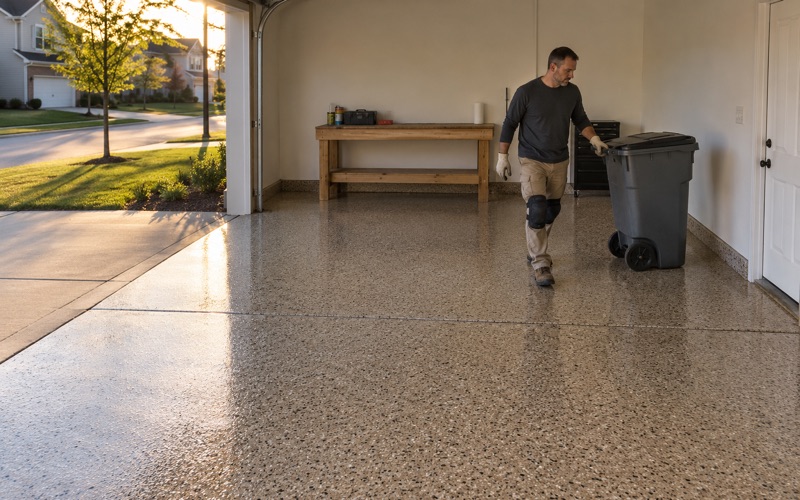
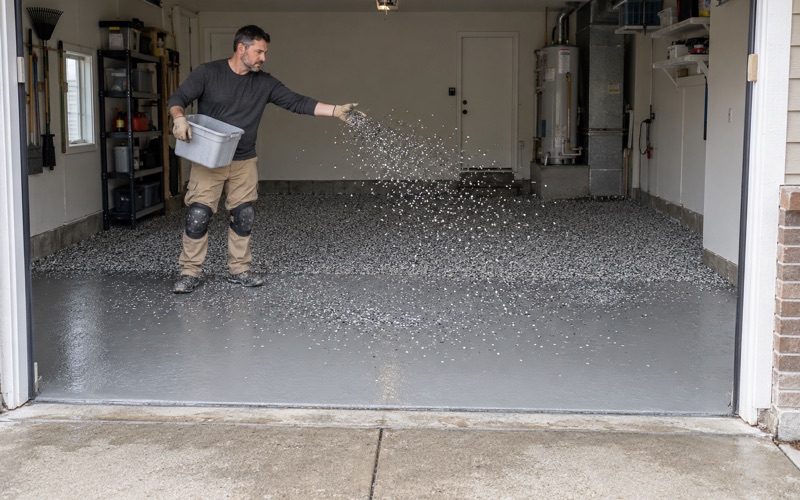
For most salon refits we look at polyaspartic and polyurea topcoats over the epoxy base. They tend to hold color better under shop lighting, and they cure faster, which shortens the time the shop is closed. Where the budget allows, a vinyl flake broadcast hides small spots between cleanings better than a solid color does.
Every coating we specify is chosen within the Illinois limit on VOC content for architectural coatings, which binds the installer as well as the manufacturer. That matters in a small shop with the doors closed and clients due back in the chairs.
Shampoo bowls, grooming tubs and a floor that cleans up
The wet stations are where a salon or grooming floor is most likely to fail and most likely to hurt someone. Water, conditioner, swept hair and the occasional dropped towel all meet in a few square feet at the base of the bowls and tubs.
Footing at the sinks
A smooth, glossy coating looks good in a photo and gets slick with conditioner on it. At the shampoo bowls we add texture, either a fine aggregate in the topcoat or a quartz aggregate broadcast, so a stylist on their feet all day has some grip. We usually keep that texture to the wet zones and leave the rest of the floor easier to sweep.
Texture is a trade-off, and we explain it before the job is sold. More grip means a little more effort with the mop, and the right amount depends on how wet the area gets and how the staff cleans it.
Grooming tubs and pet hair
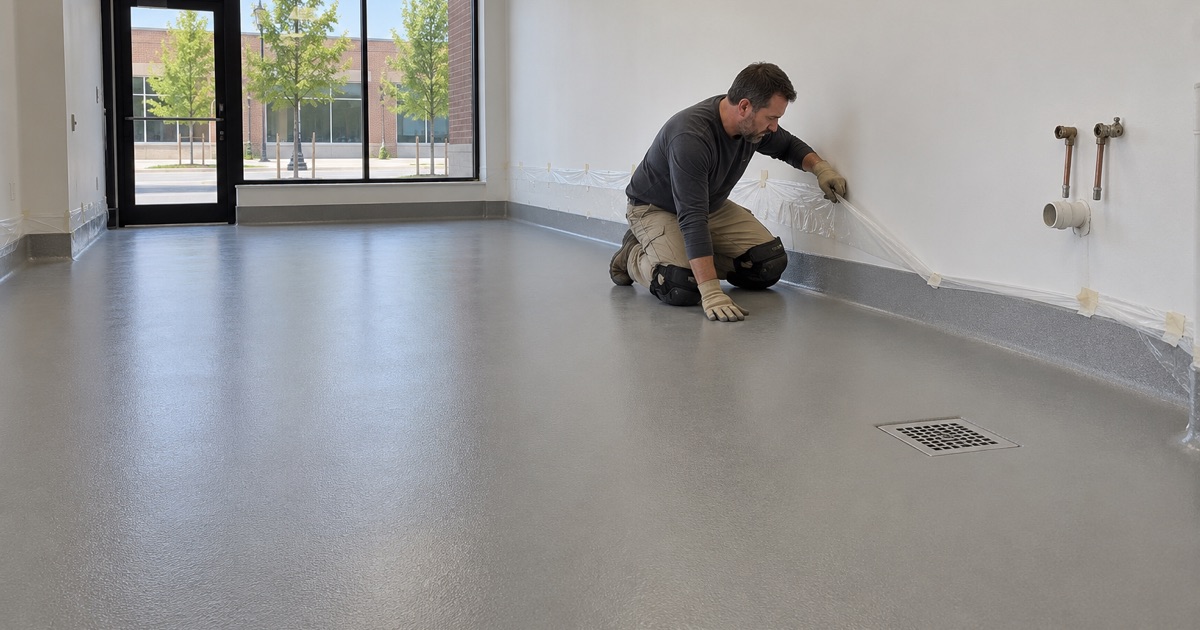
A pet grooming room adds bath water, shampoo, clipped fur and the claws of nervous dogs. The tub area stays wet for much of the day, and the floor around it takes standing water that a dry salon chair area never sees. A seamless coating with a turned-up edge at the walls keeps water from working under the baseboard.
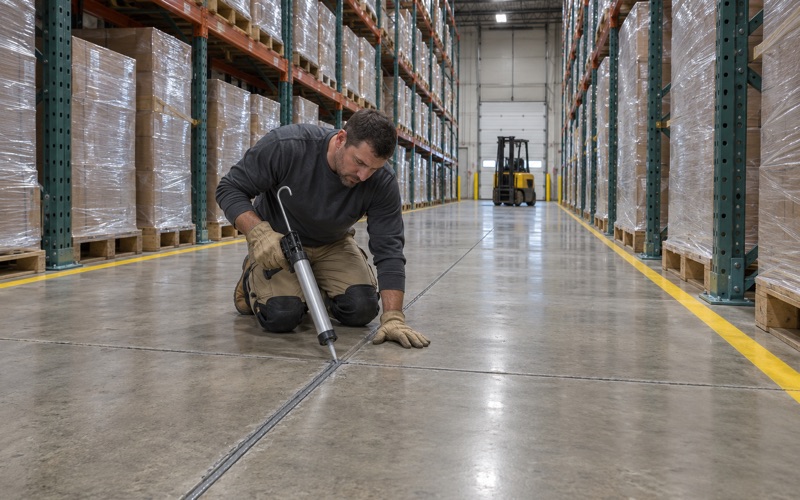
Fur and hair are the other problem. They collect in joints, cracks and the seams of old tile, which is one reason we fill joints with a semi-rigid polyurea joint filler before coating. A continuous surface lets clipped hair be swept or squeegeed in one pass.
Cleaning between clients
A salon floor gets swept many times a day and mopped at least once, so the cleaning routine is part of the specification. We ask what the shop uses on the floor and how often, because some strong cleaners wear on certain topcoats faster than foot traffic does. A neutral cleaner and a soft mop keep most of our salon systems looking right for years.
We also leave written care instructions with the finished floor. They cover which products to wipe up promptly and how long to wait before the first wet mopping.
Garage floors on Worth’s 1950s-1970s houses
Not every Worth floor is a shop floor. Census figures count 4,533 housing units in the village, and roughly three in four of them were built between 1950 and 1979. Fewer than 400 date from 2000 or later, so a garage or basement floor here is usually a coating over concrete that is well past middle age.
Old slabs and what they hide
A slab poured 45 to 75 years ago has had a long time to crack, settle, soak up oil and take on earlier paint or sealer. We read those cracks and the old coating before we quote, and if a section has heaved or crumbled past what a repair mortar can handle, we say so rather than coat over it.
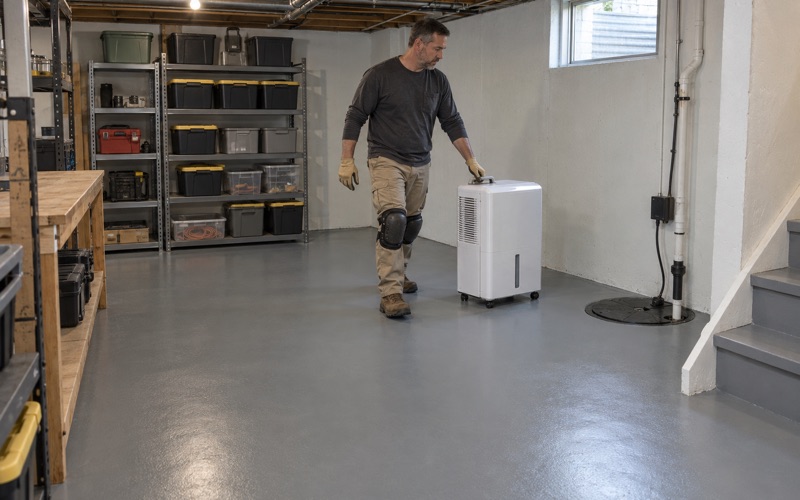
Moisture testing is a line item in our scope, not an extra sold after a floor blisters. Depending on the slab we use the ASTM F1869 calcium chloride test, ASTM F2170 relative humidity probes, or a quick ASTM D4263 plastic sheet check to start. We do not assume an older garage slab has a vapor retarder under it, and if the readings call for it, the system starts with a moisture-mitigation primer.
Brine and rock salt on the tires
A winter of driving in on salted roads brings calcium chloride brine and rock salt onto a garage floor. Left on bare concrete, that brine works into the surface and leaves white residue and scaling. We build garage floors with a full-thickness epoxy body coat and a durable topcoat so the salt sits on top and rinses off.
Hot tire pickup is the other garage complaint, where a thin coating lifts under warm tires. It almost always traces back to a thin film over a poorly prepared slab, which is why the grinding and the measured thickness matter more than the color.
Paperwork before the work
Every home job gets a written contract and the Home Repair: Know Your Consumer Rights pamphlet before work starts, as the Illinois Home Repair and Remodeling Act requires. We price per square foot for the system we are actually proposing, not a national figure for a two-car garage. And we read the warranty exclusions out loud before you sign, with moisture named first.
- 20+ Years Coating Concrete
- Moisture Testing in Every Scope
- Free Written Estimates