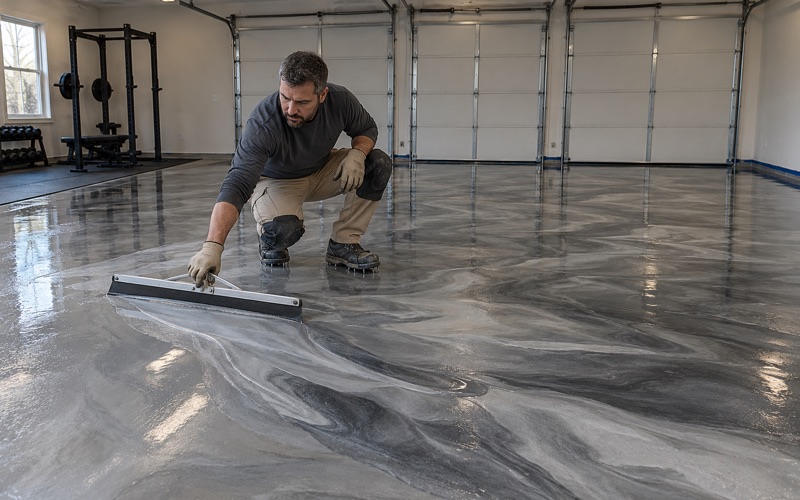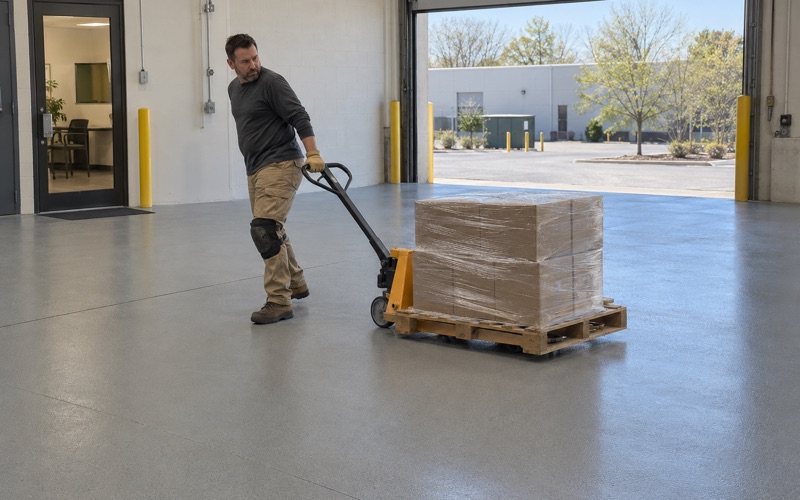
Bolingbrook Epoxy Flooring has spent more than 20 years on epoxy flooring in Palos Heights and across the southwest suburbs, and the jobs we think hardest about are the ones where a room is being asked to do something new. A floor is specified for a use, not for a building. When the use changes, the coating that suited the old tenant can be wrong for the next one, even if it still looks fine.
That is why our proposals start with what the room will carry, not with a color chart. We name the product, the system build and the finished thickness in writing, so an owner or facilities manager can hold the installed floor against the quote. We also read the cracks, joints and any existing coating before pricing, and we say so plainly when a slab needs repair before it can take a new system.
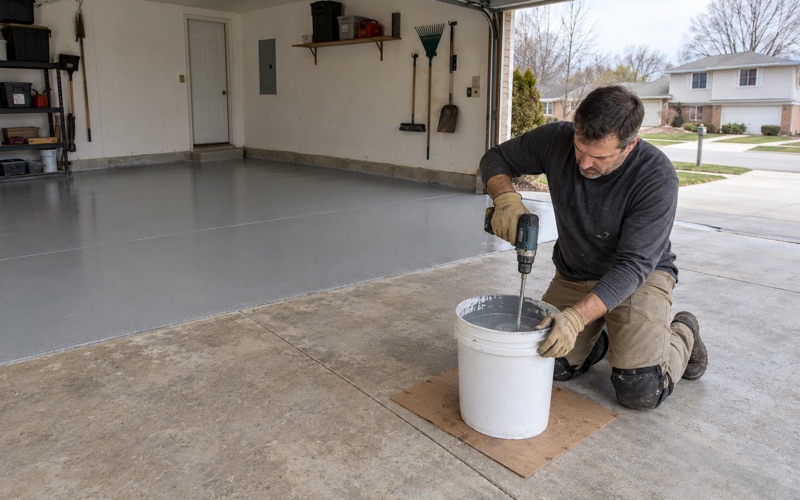
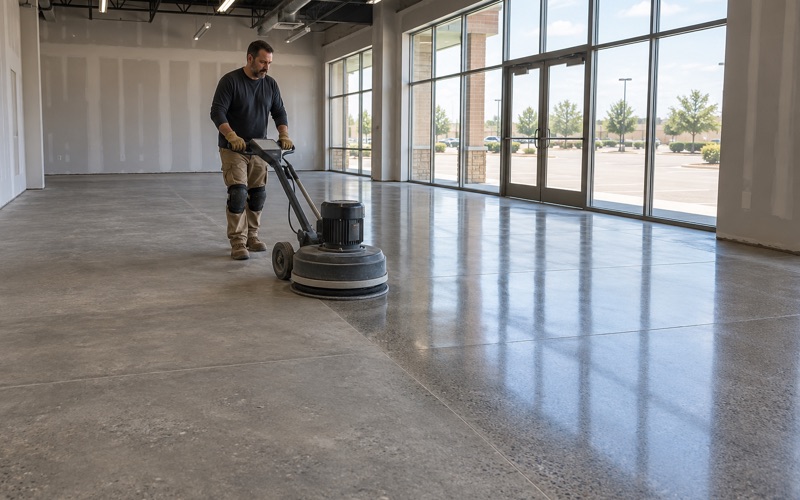
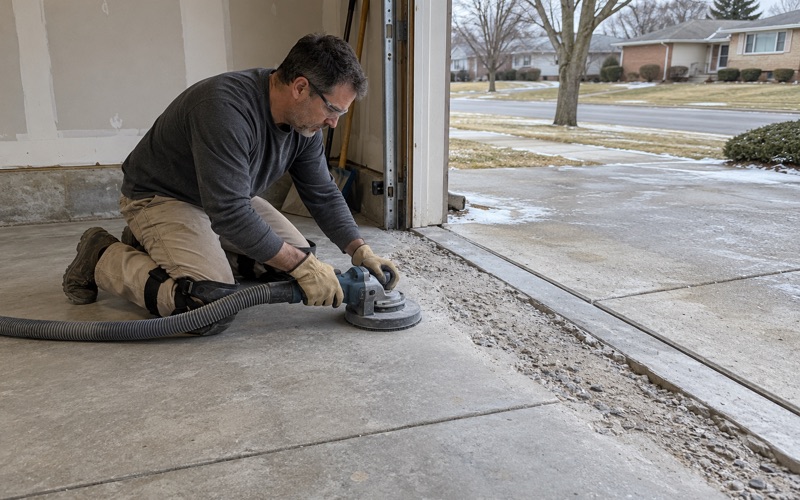
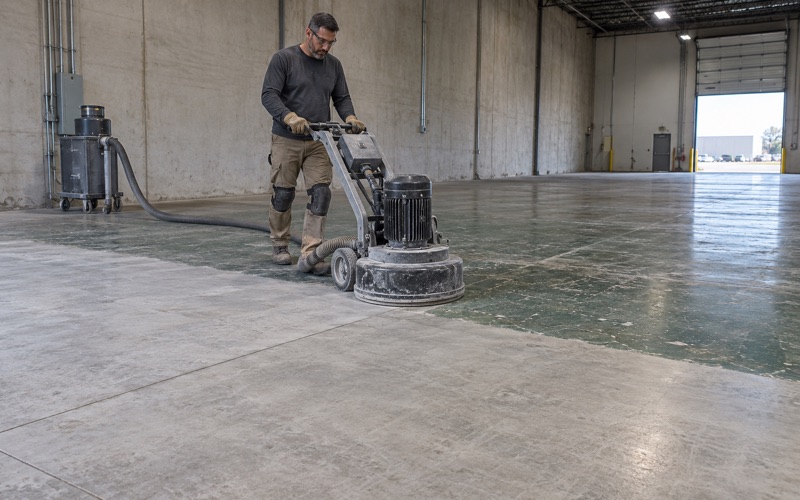
Every slab we coat is opened mechanically with a diamond grinder or shot blaster. We do not acid etch, and the grinding dust is collected at the machine rather than rinsed toward a drain. The rest of this page covers how that approach applies to institutional rooms being reassigned and to the garages in local homes.
A College Campus Changes Hands, and Its Floors Change Jobs
Trinity Christian College held its final commencement on May 8, 2026, after its board voted in November 2025 to close. Its 60-acre campus at 6601 W. College Drive was listed for vacant delivery in the third quarter of 2026: 22 buildings totaling 467,019 square feet, including four residence halls with 590 beds, the Heritage Science Center, the DeVos Athletics and Recreation Center and dining facilities. The address sits inside the city, in the part of Palos Heights that lies in Worth Township.
Chicago Christian Schools is buying the campus, and its high school already sits next door. The school system’s superintendent has spoken of more vocational training and better arts, STEM and athletic facilities there. The investor group is still evaluating plans, and which buildings get which programs had not been decided when we checked, so nothing here assumes a room-by-room outcome.
Same room, different job for the floor
A change of use resets the floor specification even when not a wall moves. A college lecture room reassigned as a shop sees rolling tool carts and dropped steel instead of chairs. A residence-hall corridor that served adults may now carry younger students at a run, and a lab bench that saw undergraduate chemistry may face a different curriculum.
Each of those shifts changes what matters: impact resistance, chemical exposure, slip resistance, cleaning method and how much downtime a room can afford. The first question we ask on a reassigned room is what it will do next fall, and only then whether the existing floor can be kept, recoated or removed.
Codes and expectations shift with the occupant as well. Rooms used by younger students may be cleaned on a different routine, and a school system may set its own standards for slip resistance and finish. We write the scope around those standards once the owner has them, rather than carrying over whatever the previous institution chose.
Reading what is already down
Institutional buildings often carry several generations of flooring, from sealed concrete to older coatings to resilient tile over a slab. We test adhesion on existing coatings and look at how they have worn, because a sound but thin system may only need a profile and a new topcoat. A delaminating one has to come up, and we would rather say that before quoting than after a recoat has peeled.
Looking for epoxy-flooring closer to Worth? See Worth Epoxy-Flooring.
Lab, Shop and STEM Floors for New Programs
Vocational and STEM programs are where a change of use asks the most of a slab. The floor in a shop or lab is part of the equipment, and it has to be chosen for the specific chemicals, loads and cleaning the room will see. A general-purpose garage system is rarely the answer for a teaching space.
Science and STEM rooms
A science room needs a floor that shrugs off spills from the reagents actually used there, cleans without absorbing them and stays seamless at the base. We usually build these on 100% solids epoxy with a chemical-resistant topcoat chosen against the program’s own chemical list. Where a room is set up for electronics work or sensitive instruments, we can specify a static-dissipative system and test it against its stated resistance range after cure.
Shop and vocational rooms
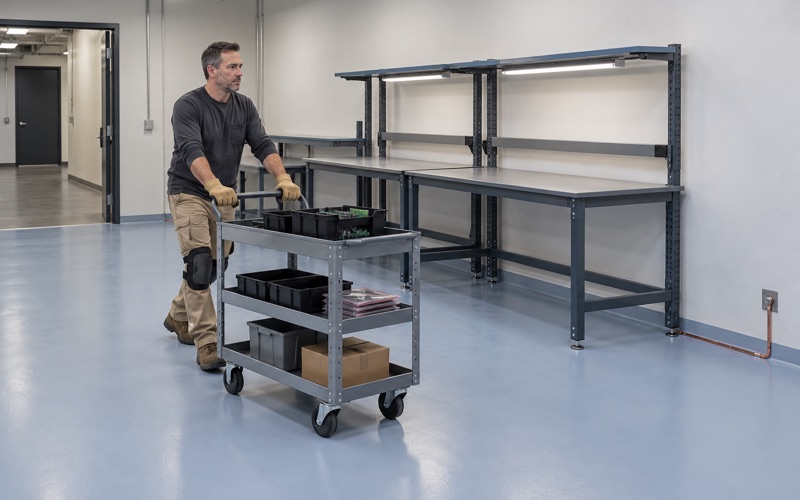
Shop floors take point loads, dropped tools, oils and cutting fluids. A thicker build, often with a quartz aggregate broadcast for texture, holds up better than a thin decorative coat, and urethane cement is worth considering where hot work or thermal shock is part of the curriculum. We anchor the choice to what the program will run rather than to a catalog name.
Arts and studio rooms
The campus listing also names an art and communication center, and studio rooms make their own demands on a floor. Paint, clay slip and solvent cleanup call for a seamless surface that releases stains and tolerates frequent scrubbing. A light-colored epoxy with a satin topcoat keeps a studio bright, while a subtle flake or quartz texture keeps wet spots from turning slick.
Joints, anchors and equipment pads
Machines and benches get bolted down, and control joints run under all of it. We fill joints with a semi-rigid polyurea filler so carts roll smoothly and edges do not chip, and we plan anchor locations with the facilities team before coating so drilling does not punch through a fresh floor. Getting that sequence right is cheaper than repairing it later.
Gym, Dining and Corridor Floors After Vacancy
Large campuses come back into service in stages, and the floors in shared spaces tend to set the schedule. Recreation buildings, dining halls and long corridors carry the most traffic and the strictest cleaning routines. Each needs a system matched to that use and a cure window that fits the opening date.
Athletic support spaces and corridors
Locker rooms, training rooms and the corridors around a gym see wet feet, grit and heavy cleaning machines. A broadcast system with a textured polyaspartic or polyurea topcoat gives traction without becoming hard to mop. Hardwood courts and synthetic sports surfaces are a different trade, so we stay to the concrete around them and say so in the scope.
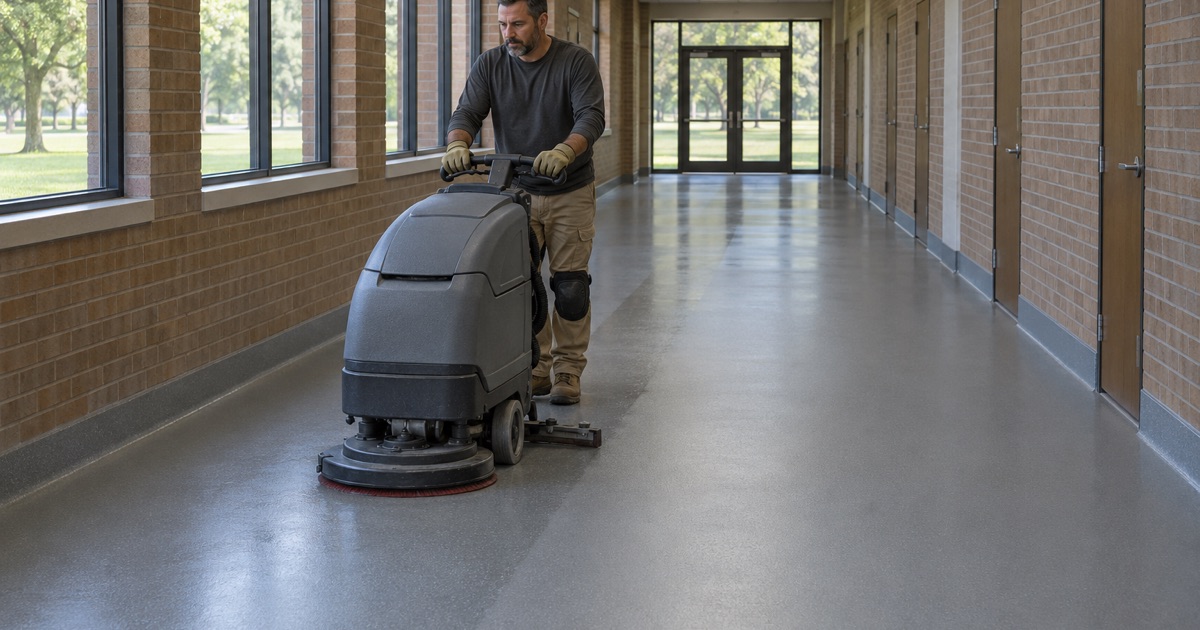
Residence-hall corridors, stairwell landings and common rooms are a separate question if those buildings are reassigned. Whether they house students again or take on classroom, office or program space, the floor has to match that next use. We price those areas on the same terms: what traffic they will see, what cleaning they will get and how quickly they need to reopen.
Dining and kitchen floors
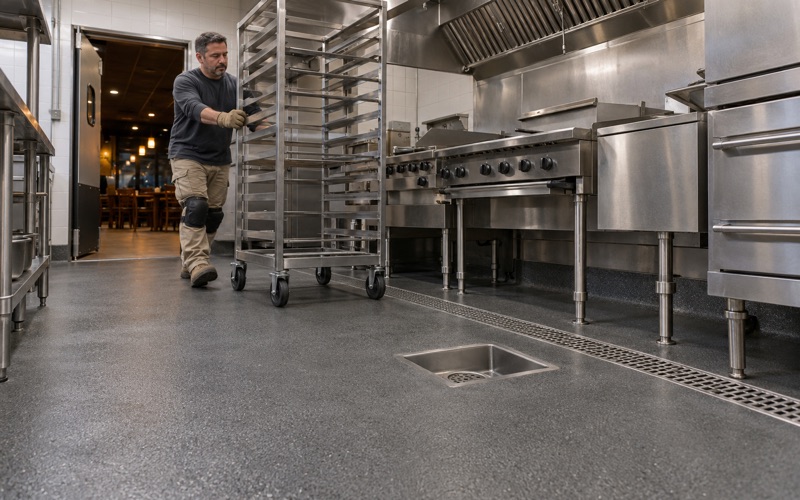
A dining room or serving kitchen being reopened for a new operator is a food-service floor, and Palos Heights falls under the Cook County Department of Public Health rather than a Will County office. We build kitchen floors around the FDA Food Code, including coved floor and wall junctures and the antislip exception for areas that need traction. We coordinate with whoever holds the plan review so the floor matches what the reviewer expects before the coating goes down.
Testing a slab before it returns to service
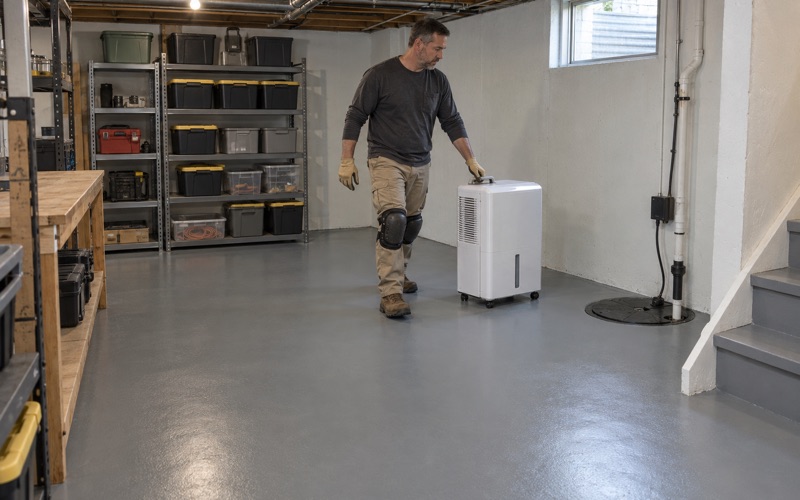
A building that has sat empty gives no reliable signal about the moisture in its slabs, in either direction, so we test rather than guess. Moisture testing is a line item in every scope we write: ASTM F2170 relative humidity probes or ASTM F1869 calcium chloride tests, with an ASTM D4263 plastic sheet check as a quick screen. If readings exceed the product’s limits, a moisture-mitigation primer goes into the proposal before any decorative work does.
Warranty exclusions get read out before a job is signed, and moisture is the first one we name. Cure is scheduled against slab temperature and the dew point spread at the surface, not against a calendar date, which matters when a building is being readied for new occupants on a deadline. We also choose coatings within the Illinois VOC limits for architectural coatings, which bind the installer as well as the manufacturer.
Garage Floors in Palos Heights Homes and Townhomes
Away from College Drive, Palos Heights is a city of owner-occupied homes. Owners occupy about 93 percent of homes here, and roughly 1,020 owner-occupied homes are single-family attached units, so a large share of garage floors sit inside an association’s rules as well as the owner’s taste. We are glad to review those rules with you before choosing a color or a finish.
Built for winter brine
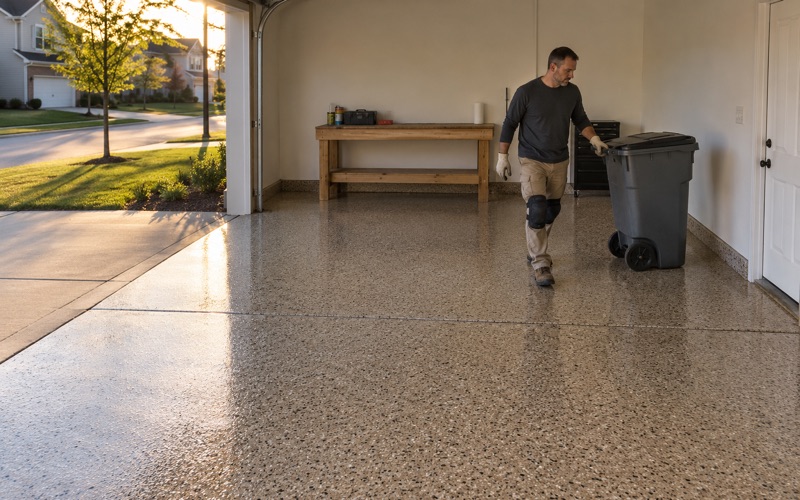
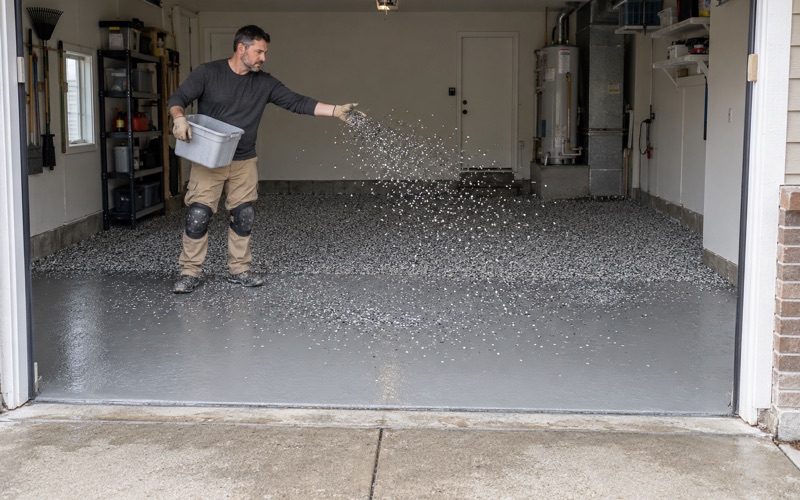
Garage slabs in this area take calcium chloride brine and rock salt off every tire from December through March. A ground, properly profiled slab with a 100% solids epoxy base and a polyaspartic topcoat resists that far better than a single coat from a kit. Vinyl flake broadcast hides grit between washdowns and adds texture underfoot, and a full-thickness system also avoids hot tire pickup.
Older slabs and repair first
Much of the city’s housing went up between the 1950s and 1970s, so many garage slabs carry decades of cracks, spalls and old sealers. We grind those surfaces to a measured profile, repair what needs repairing and tell you plainly if a section should be replaced rather than coated. Prices are quoted per square foot for the exact system we propose, not from a national per-garage figure.
For an attached garage, the grinding happens a few feet from the house, so dust control matters inside as well as out. Our grinders run with vacuum collection, and nothing gets washed toward a floor drain or out to the street. You get the schedule in writing, including how long the cars have to stay off the new floor.
Paperwork before the first pass
Illinois issues no state license for flooring or coatings work, so we confirm the City of Palos Heights Building Department’s own registration, bond and insurance requirements before a job is scheduled. Every home job comes with a written contract and the Home Repair: Know Your Consumer Rights pamphlet, as the Illinois Home Repair and Remodeling Act requires. If an unheated garage is too cold to cure a coating properly, we will tell you it has to wait for spring.
- 20+ Years Coating Concrete
- Moisture Testing in Every Scope
- Free Written Estimates