Bolingbrook Epoxy Flooring has spent more than 20 years on epoxy flooring in Mokena and across Will County, and the floors that teach us the most are the ones that get cooked on, hosed down and chilled in the same week. A two-car garage and a processing room both start as concrete, but they end up needing very different resin. Our first job is working out which kind of floor we are standing on before anyone talks about color.
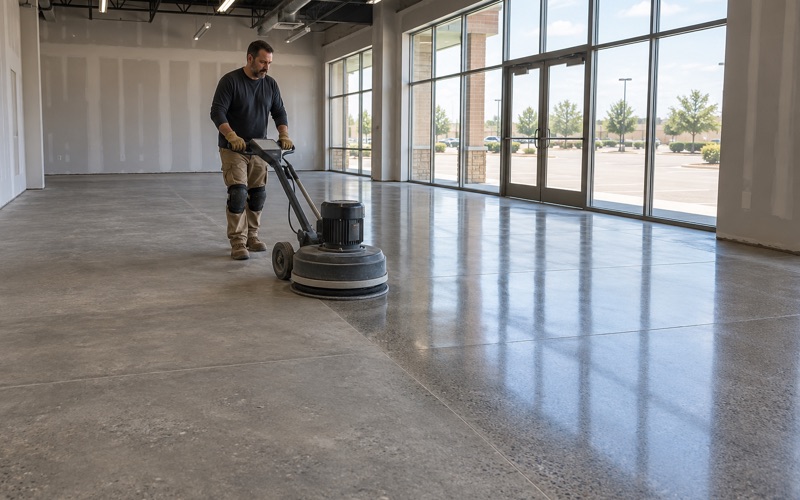
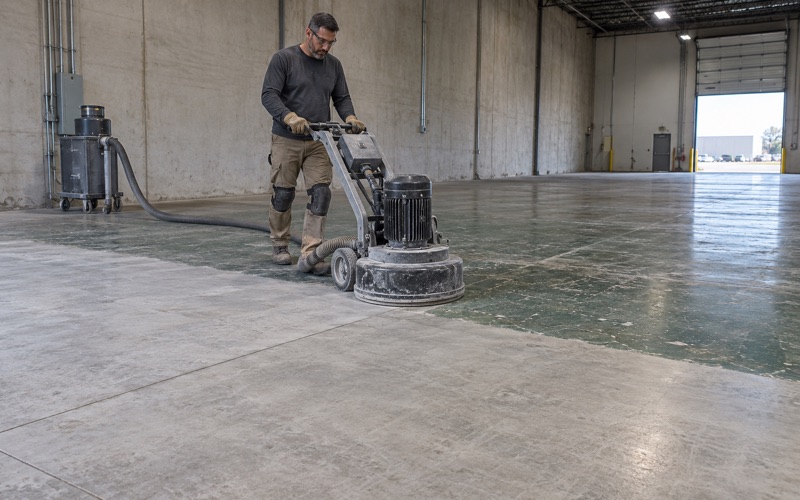
That work starts with the concrete. We open every slab mechanically with a diamond grinder or shot blaster, never with acid, and moisture testing sits on the proposal as its own priced line instead of turning up after a coating has already blistered. If the cracks, joints or old coating tell us the slab needs repair first, we say so before we quote.
What we hand over in writing is specific: the product, the system build, the finished thickness and a per-square-foot price for that exact system. A food room, an equipment bay and a townhome garage each get a different build, and the proposal makes plain which one was sold, so the finished floor can be checked against the quote.
A Meat and Poultry Test Plant on 191st Street
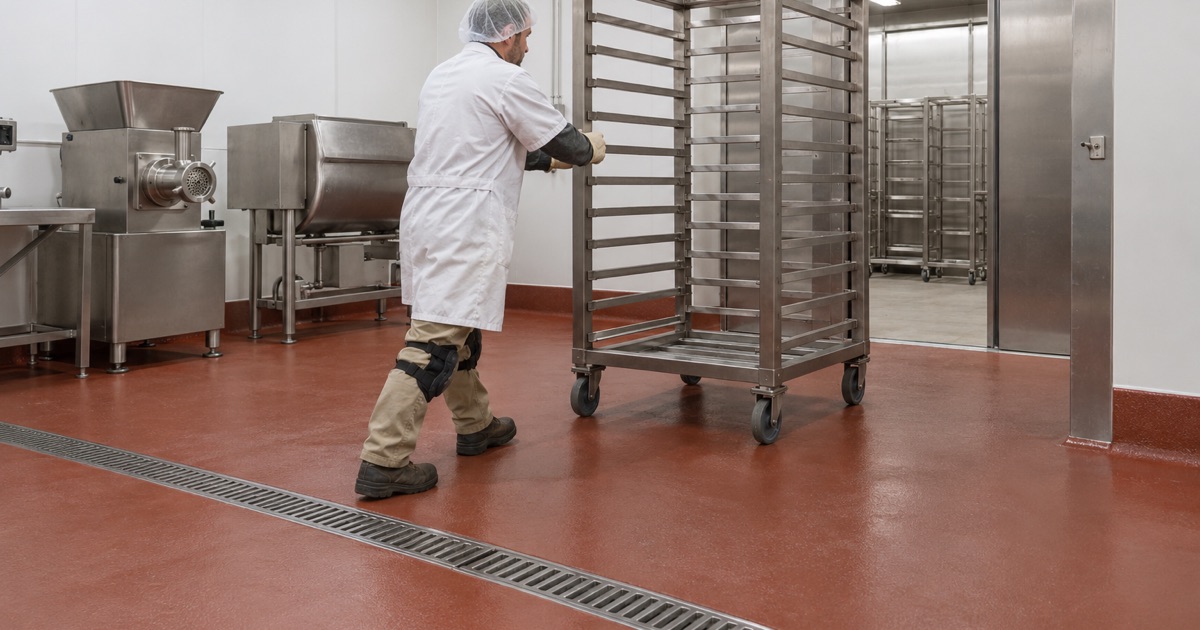
Mokena is a Will County village of about 20,000 people, and inside its limits sits a working food processing floor. Provisur Technologies keeps its corporate headquarters at 9150 191st Street, an address that geocodes inside the village in Frankfort Township. Its brands, including Formax, Beehive and Weiler, build grinding, mixing, forming, coating, cooking, freezing and slicing equipment.
In March 2015 the company opened its Ingenuity Center there, a 20,000-square-foot addition to the Mokena complex that took two years of planning and construction. Provisur describes it as a fully functioning and equipped food processing facility with a test kitchen and a food lab. Trade press covering the opening listed burger forming, bacon slicing and whole-muscle poultry processing among the planned demonstrations.
We have never worked on that building, and we have not seen or read anything about its floor. We bring it up because it shows, right on 191st Street, what a meat and poultry room puts on concrete. A processor, commercial kitchen or food lab doing similar work is asking its floor to survive the same list.
Animal fat and fatty acids
Grinding and forming meat leaves fat on every surface, and fat does not stay harmless once it sits on a floor. As animal fats break down they release fatty acids, and those acids soften, stain and dull many thin epoxy systems. A coating that looks fine in a garage can lose its gloss and its grip under daily fat exposure.
Blood and brine add to the load. Curing and injection brines carry salt into every joint and pinhole, and a coating with even small voids lets that solution reach the concrete underneath. Once liquid is working at the bond line, the coating starts to lift from below rather than wear from above.
Hot water and sanitizer washdown
Cleanup in a meat room means hot water, degreasers and sanitizer, often more than once a shift. Hot water drives fat deeper into any weak spot, and the constant wet-dry cycle tests adhesion harder than the spills themselves. That is why we will not quote a thin-film system for this kind of room, however good it looks on day one.
Texture is the other half of a washdown floor. A smooth gloss finish turns slick under a film of fat and water, so we build traction into the topcoat with a broadcast aggregate sized for how the room is cleaned. Too coarse, and the floor holds debris that a squeegee cannot clear.
Looking for epoxy-flooring closer to Palos Heights? See Epoxy-Flooring Services in Palos Heights.
From Cooker to Freezer: Urethane Cement, Coves and Drains
The process list at that test plant runs from cooking to freezing, and that range is the second thing a processing floor has to handle. Hot water and cooker spills can land on a slab one hour, and cold from freezing equipment can sit on it the next. Concrete and resin expand and contract at different rates, so every swing loads the bond line between them.
Why rigid coatings crack
A rigid epoxy is hard and strong, but it does not give much. Under repeated thermal shock it tends to crack, and once a crack opens, fat and brine run straight into it and undercut the coating. In a room where that cycle repeats every day, a system that would last for years in a showroom can fail quickly.
Scheduling matters here too. We plan the cure against slab temperature and the dew point spread at the surface rather than a calendar date, because a chilled room that is still cold at the floor will not cure a resin properly. If a room cannot be brought into range, we say so and move the date.
Urethane cement as the usual answer
Urethane cement is the usual specification for meat and poultry rooms because it answers both problems at once. It tolerates hot washdown and freezer cold far better than a rigid epoxy, and it holds up against the fats, fatty acids and brines that break down thinner systems. It goes down thick, troweled or applied as a slurry, with aggregate texture for traction on a wet floor.
It costs more than a garage coating, and we price it per square foot for the build we actually propose. We will also tell an owner when part of a building, such as a dry packaging or storage area, does not need it.
Thickness also matters at the transitions. Where a cooking area meets a cold room, the floor sees its sharpest temperature swing, and that is where we would rather add material than save it.
Coves, drains and plan review
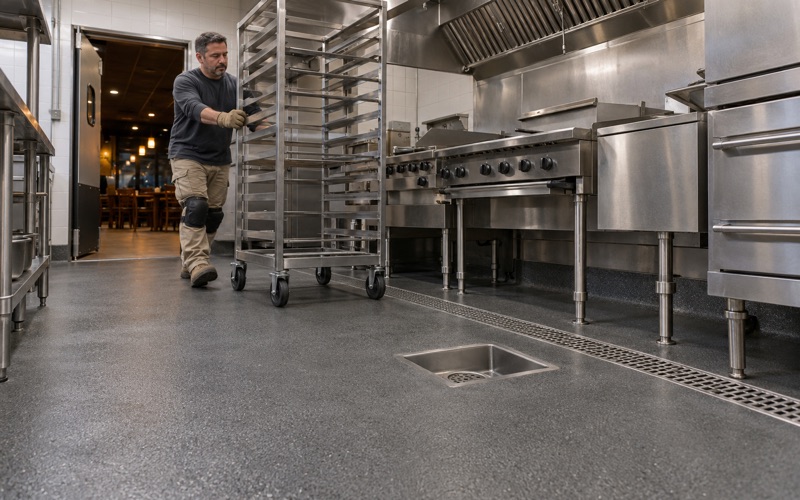
Where floor meets wall, a food room generally needs an integral cove so washdown water and debris have no corner to collect in, and FDA Food Code 6-201.13 addresses coved floor and wall junctures. Drains and trench edges get extra detail, since that is where hot water pools and where coatings most often let go first.
For a restaurant or food plant that goes through Will County Health Department plan review, we specify the floor so it can pass that review before the village issues a permit. No federal agency approves a floor coating for food use, and we never sell one as if it were.
Shop and Distribution Floors on 88th Avenue and 191st Street
Food processing is not the only industrial work in the village. Altorfer CAT, a Caterpillar dealer, has a location at 19001 88th Avenue inside Mokena, and the village names Gordon Electric, a wholesale electrical distributor, and ABC Supply Co., a roofing and building materials supplier, among its large employers.
We have not read what happens on the Altorfer floor in Mokena. What heavy-equipment shop floors take in general is well known, though: hydraulic fluid, diesel, grease and the point loads of steel tracks and heavy attachments.
Hydraulic fluid and steel tracks
Hydraulic fluid and diesel soak into bare concrete and keep wicking back up, which ruins the bond of anything applied later. For a shop slab we grind to the ICRI surface profile the system calls for, then build a 100% solids epoxy base with a chemical-resistant topcoat, or move to urethane cement where hot fluids and heavy impact are a daily event. A quartz aggregate broadcast keeps traction when the floor is oily.
Steel tracks and dropped attachments chip thin coatings at the edges first. Thickness and aggregate fill are what buy impact resistance, which is why the finished thickness is written on the proposal rather than left vague.
Distribution and warehouse floors
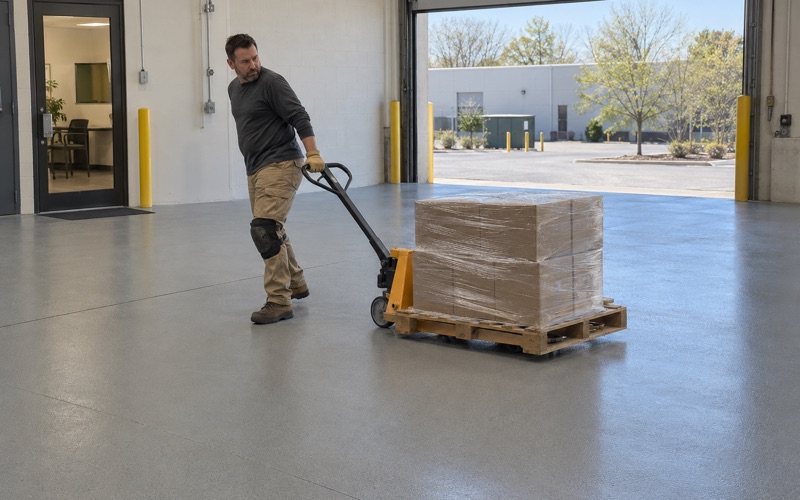
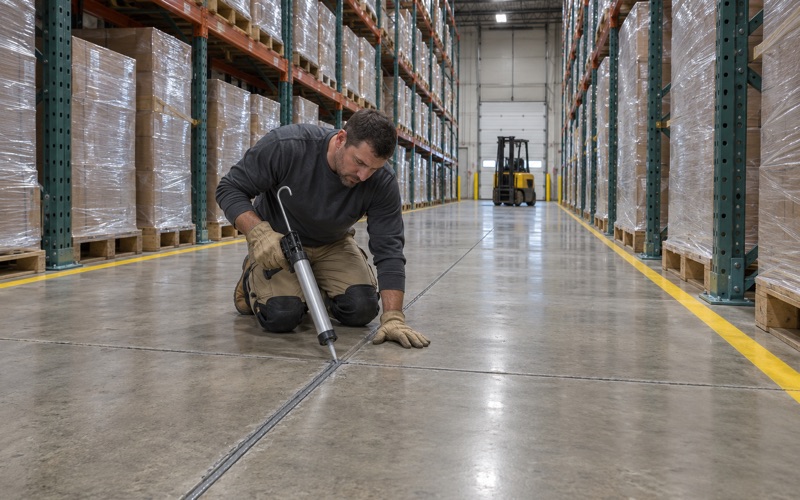
A building that ships and receives every day cannot close for a floor. We plan around the racking, the joints and the dock schedule, phase the work in sections, and use weekend and overnight windows so the building keeps moving. Rack anchors and control joints are mapped before we start, and working joints get a semi-rigid polyurea filler that carries a pallet-jack wheel without cracking out.
Forklift wheels concentrate wear at aisle ends and turns, so those lanes often get a heavier build than the storage bays beside them. The proposal shows which zones get which system, and the price follows the square footage of each.
Grinding a warehouse slab throws a great deal of fine dust. Ours is collected at the grinder and never washed toward a floor drain or storm inlet.
Garage Floors in Mokena’s 1990s and 2000s Neighborhoods
Most homes in Mokena are newer than the village’s 1880 incorporation might suggest. Of roughly 7,600 housing units, 66.1 percent were built since 1990 and about 2,300 went up in the 1990s alone, so the typical residential floor we see is a 1990s or 2000s garage slab. The village also has 1,196 single-family attached homes, where a townhome garage shares a wall with a neighbor and dust control matters even more.
What a slab from that era needs
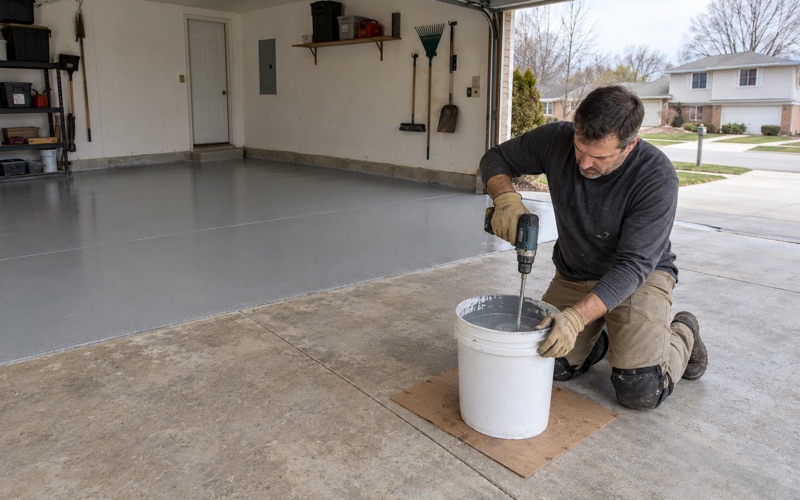
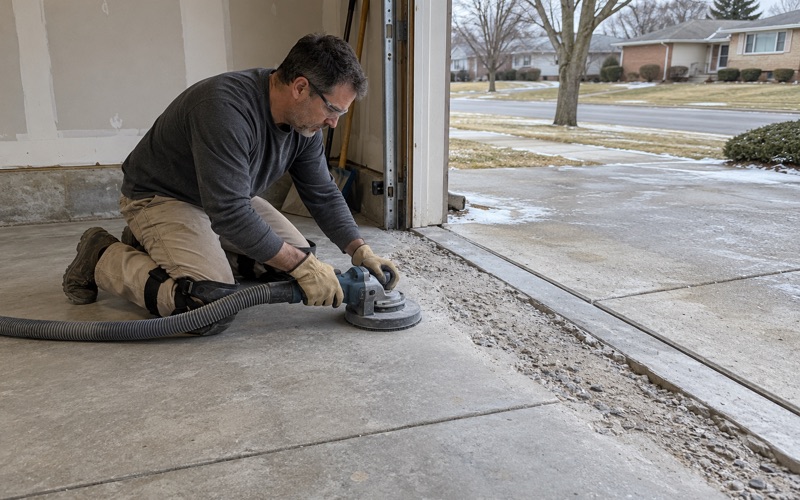
A garage slab of that age is long past its curing years, but it often carries a sealer, a store-bought coating or oil stains that have to come off. We grind it open, read the cracks and joints, and repair what needs repair before any resin goes down. If the slab is too far gone to coat, we say so instead of covering the problem.
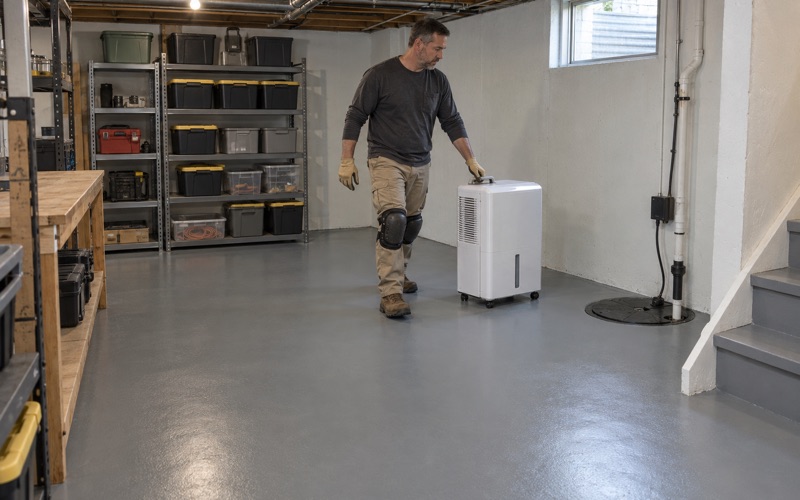
Moisture still matters in a garage. We test with ASTM F1869 calcium chloride kits or ASTM F2170 in-situ relative humidity probes, and when the readings call for a moisture-mitigation primer, it appears on the proposal. Warranty exclusions are read out before the job is sold, and moisture is the first one we name.
The system we usually build
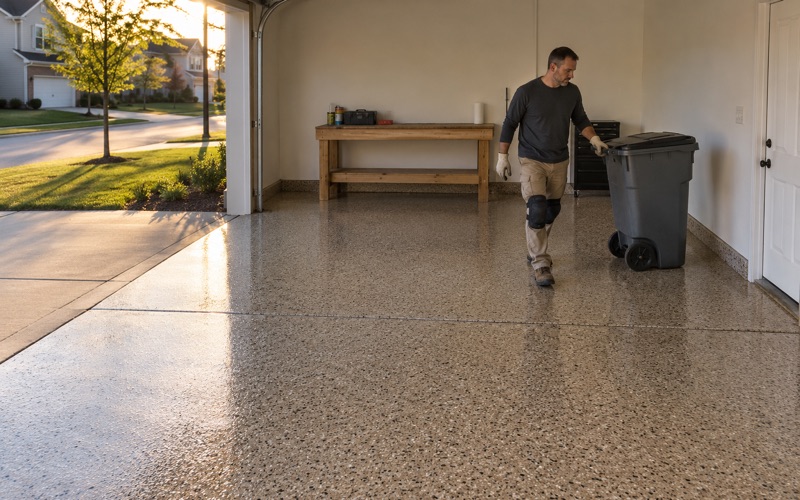
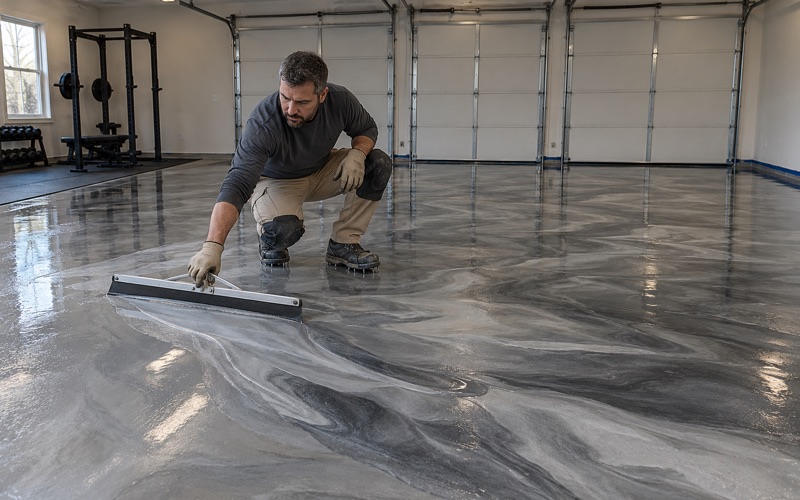
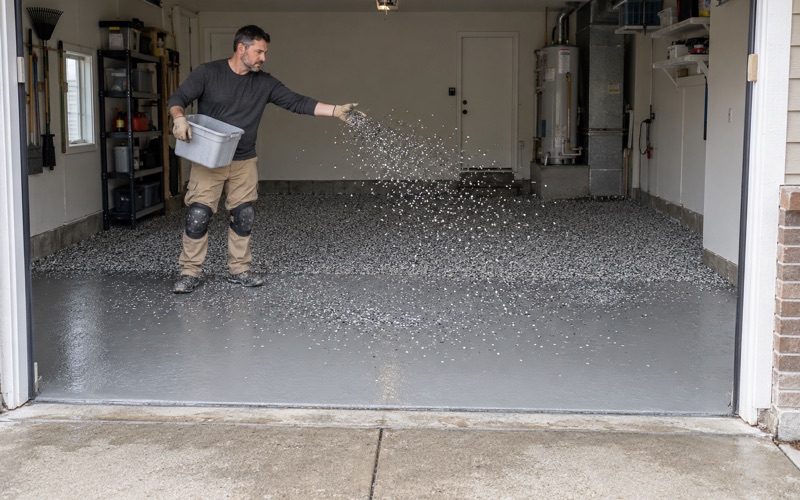
A common garage build is a 100% solids epoxy base with a full vinyl flake broadcast and a polyaspartic topcoat, which resists hot tire pickup and wipes clean. The coatings we choose fall within the Illinois limit on VOC content, a rule that binds the installer as well as the manufacturer.
A full flake broadcast also hides the small marks a working garage collects, and a polyaspartic topcoat lets a floor return to light use sooner than a slow-cure system. We talk through color and flake size only after the build itself is settled.
Every home job comes with a written contract and the state’s Home Repair: Know Your Consumer Rights pamphlet before work starts, as the Illinois Home Repair and Remodeling Act requires. Illinois issues no license for flooring or coatings work, so we confirm Mokena’s own contractor registration, bond and insurance rules before a job goes on the calendar.
- 20+ Years Coating Concrete
- Moisture Testing in Every Scope
- Free Written Estimates