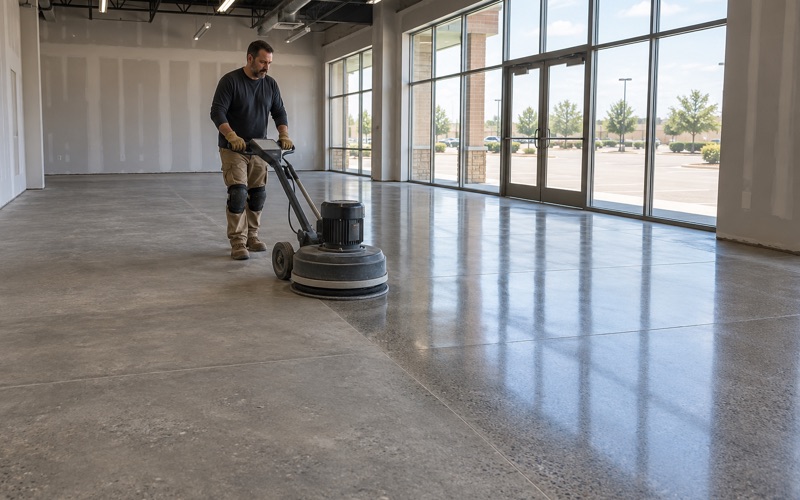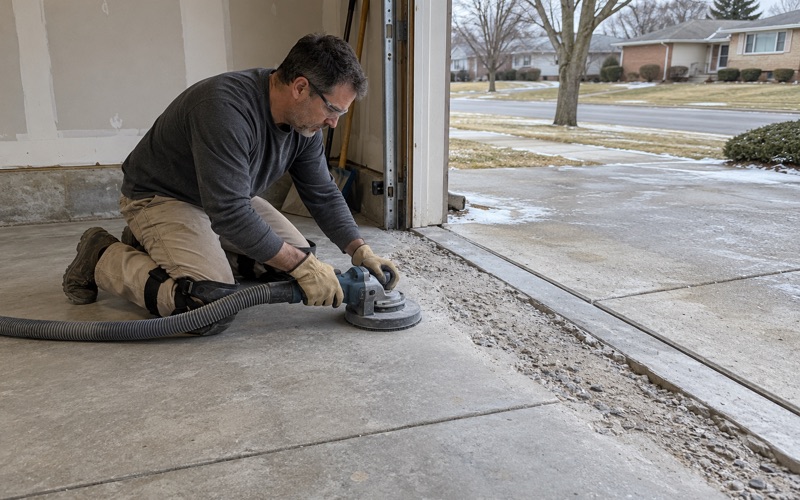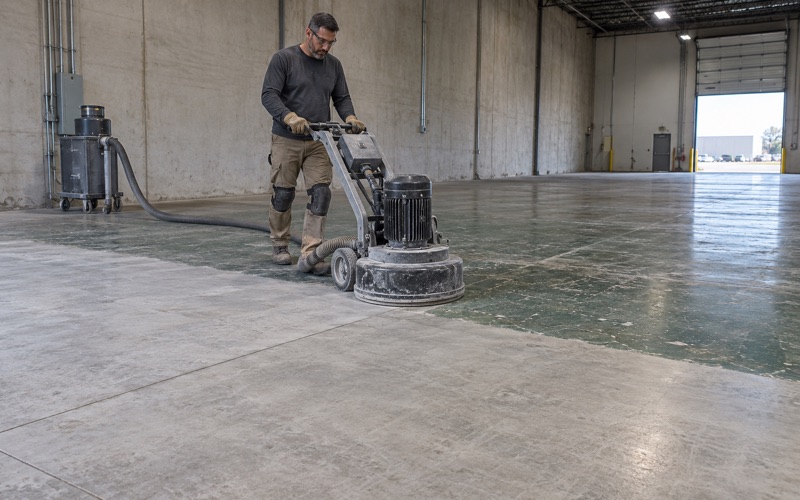
Bolingbrook Epoxy Flooring brings more than 20 years on concrete to epoxy flooring in La Grange Park, and we start every job with two questions: what the room has to survive each day, and whether the slab underneath can hold a coating at all. A coating is only as good as its bond, so every slab we coat is opened mechanically with a diamond grinder or a shot blaster. We do not acid etch.
For a room that is mopped and disinfected several times a day, the questions get sharper. Is the slab dry enough to coat? Where should the floor have no seams, and which rooms belong under a cushioned covering that no coating can replace? We answer those in writing before anyone signs.
The proposal names the product, the system build and the finished thickness, so an owner or general contractor can check what went down against what was quoted. Moisture testing sits in that scope as its own line, and the warranty exclusions are read out before the job is sold, with moisture named first.
A new childcare center and what Illinois licensing says about floors
In its Summer 2025 newsletter, the Village of La Grange Park welcomed The Gardner School Daycare, a new childcare facility planned for the corner of Sherwood Road and Oak Avenue, near Memorial Park. The Gardner School operates academically focused preschools and childcare centers for children from six weeks through age five. We have not worked on that building or seen its plans; it is simply the clearest local example of a floor that carries rules most floors do not.
The project address is listed as 545 Sherwood Road, which sits inside the village in Proviso Township, Cook County. Village summaries of its development pipeline list it among approved projects alongside a Recreation Center addition at 1501 Barnsdale. For any operator fitting out a space like it, the floor decisions arrive early, because the licensing language reaches the floor directly.
The rule, in its own words
A licensed day care center in Illinois answers to the Illinois day care center licensing standards, 89 Ill. Adm. Code 407. Section 407.370(e)(2) reads: “The floors and floor coverings shall be washable and free from drafts, splinters, and dampness.” That is one sentence, and most of its clauses land on the floor contractor’s side of a build-out.
The same section, at (r)(2), requires that toys, table tops, furniture and similar equipment used by children be washed and disinfected when soiled or contaminated with food, body secretions or excrement. A room run to that standard is wet-cleaned constantly. The floor under those tables takes the same mop water and the same cleaning chemistry as the furniture standing on it.
What the rule does not say
The standard asks for floors that can be washed and that stay dry. It does not require epoxy, approve any product or certify any installer, and an operator should be wary of anyone who claims otherwise. We work from the text of the rule and leave inspection questions to the center’s own licensing contact.
Our part is narrower and more practical. In the rooms where a resin system fits, we build a floor that can be scrubbed every day and stays bonded, because the slab under it was tested and dry when the coating went down.
The other clauses sort themselves out quickly. Splinters are a wood-floor problem, and a resin floor has no grain to lift. Drafts come from the building envelope, doors and air handling, not from the floor finish, so we leave that clause to the architect and mechanical trades rather than promising a coating solves it.
Looking for epoxy-flooring closer to Westchester? See Epoxy-Flooring Services in Westchester.
Free from dampness: test the slab first
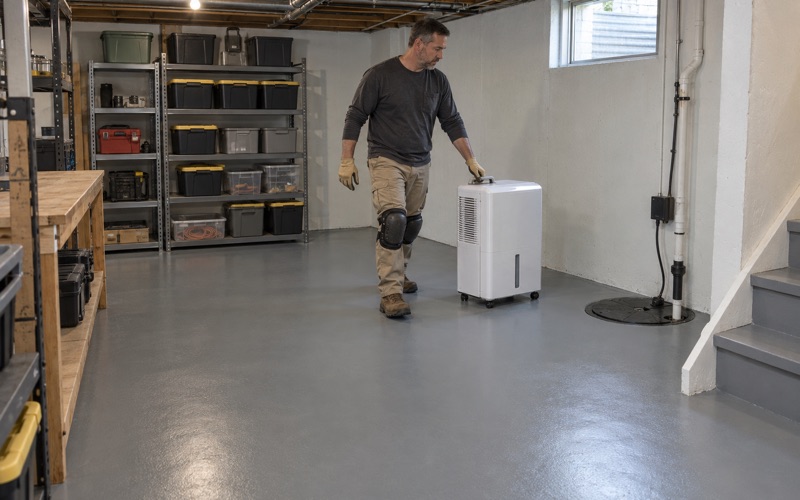
Dampness is the clause that fails floors quietly. A slab can look dry and still push moisture vapor up into whatever covers it, and a coating that traps that vapor can blister, lift at the edges or whiten with efflorescence underneath. In a room where children sit and crawl, a lifting patch is no longer a washable floor.
How we test
Moisture testing is priced into our scope as a line item, so it happens before the coating rather than after a failure. We screen with the ASTM D4263 plastic sheet test, then use ASTM F1869 calcium chloride moisture vapor emission rate testing and ASTM F2170 in-situ relative humidity probes wherever the reading will decide the system. Results are compared against ASTM F710 moisture thresholds and against the limits the coating manufacturer publishes for its own product.
Older slabs and what a high reading means
Much of the village’s building stock is old: of 5,629 housing units, 2,547 were built in the 1950s and 791 in 1939 or earlier. A slab of that age may have been poured with no vapor retarder beneath it, the layer ASTM E1745 now describes, and a commercial space carved out of an older building can carry the same history.
When a slab reads high, we say so. Some readings call for a moisture-mitigation primer under the system, some call for waiting, and a few mean the concrete needs repair or replacement before anything goes on it. We read the cracks, joints and any old coating before quoting, and we tell the owner plainly which case applies.
Curing to the room, not the calendar
Resin cures to temperature and humidity, not to a date. We schedule against slab temperature and the dew point spread at the slab surface, because a coat laid on a slab sitting near dew point can pick up amine blush and lose adhesion at the next coat. For a center working toward a licensing visit, that means building cure time into the schedule early rather than squeezing it at the end.
Full cure also matters for odor and cleaning. A floor that is walkable is not always ready for daily disinfectant, so we give the operator a written return-to-service date for foot traffic, furniture and wet cleaning, each one separately. Moving cribs and tables back too soon is how a fresh topcoat gets marked before children ever arrive.
Washable means seamless where it matters
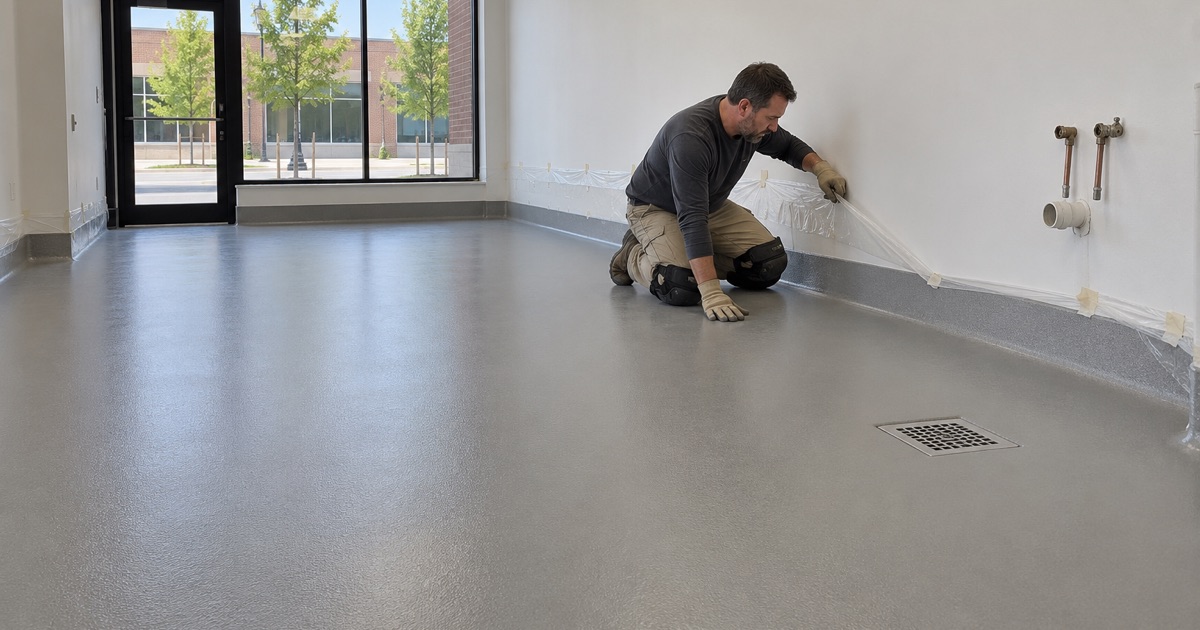
A washable floor is one that water and disinfectant cannot get under. Tile and sheet goods have seams, and seams are where cleaning solution and soil collect; a resin floor applied as one continuous layer removes most of them. Where the floor meets the wall, an integral cove base carries the same coating a few inches up, the detail FDA Food Code 6-201.13 describes for coved floor and wall junctures in food areas.
Building the system
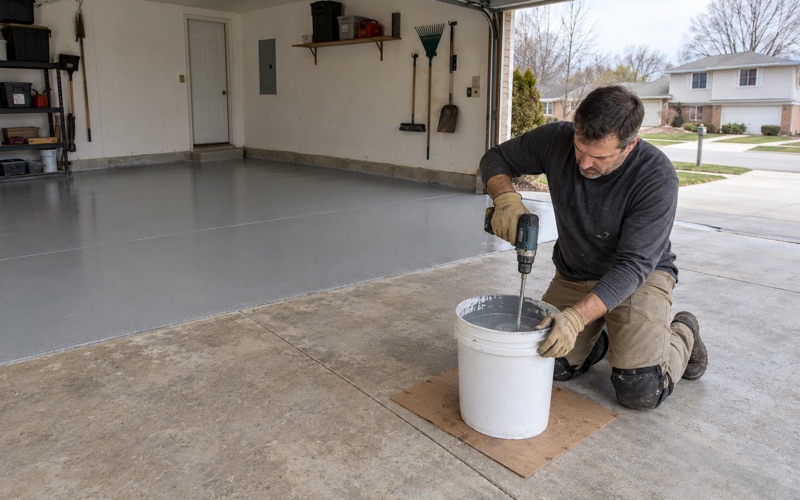
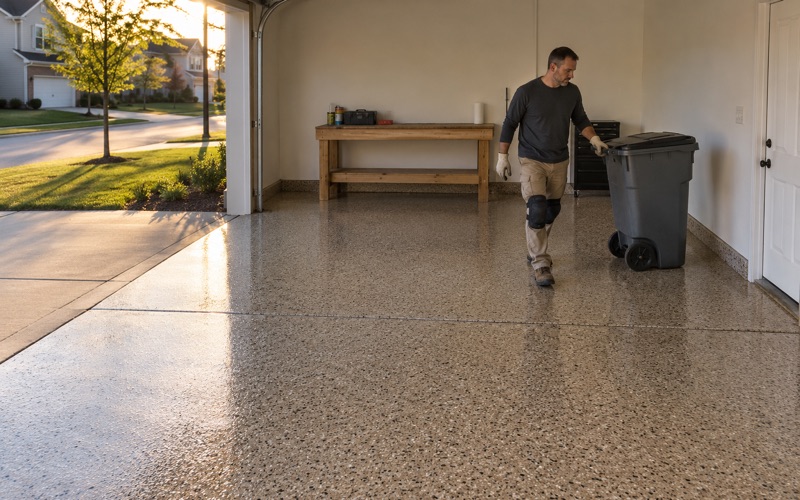
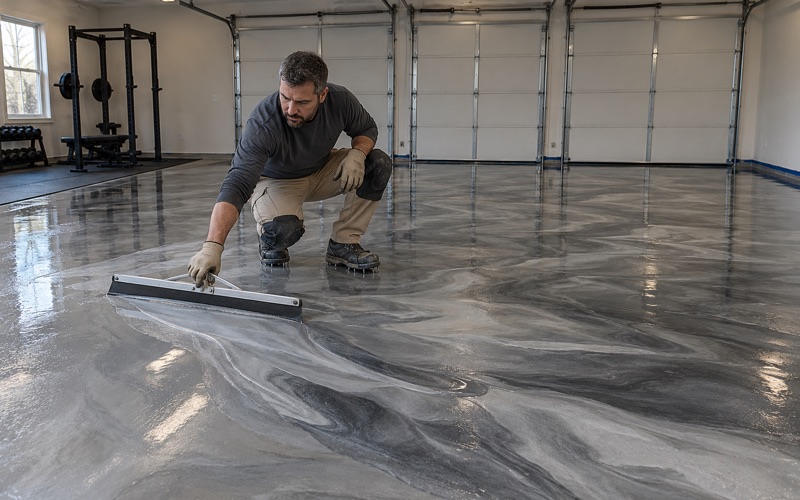
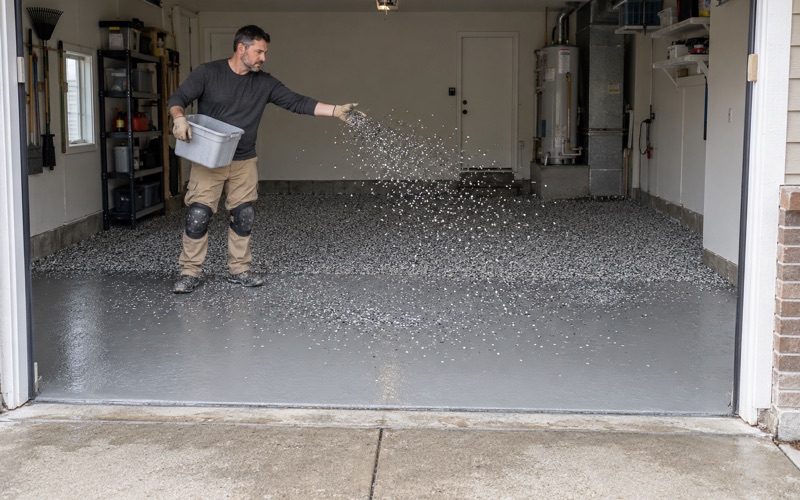
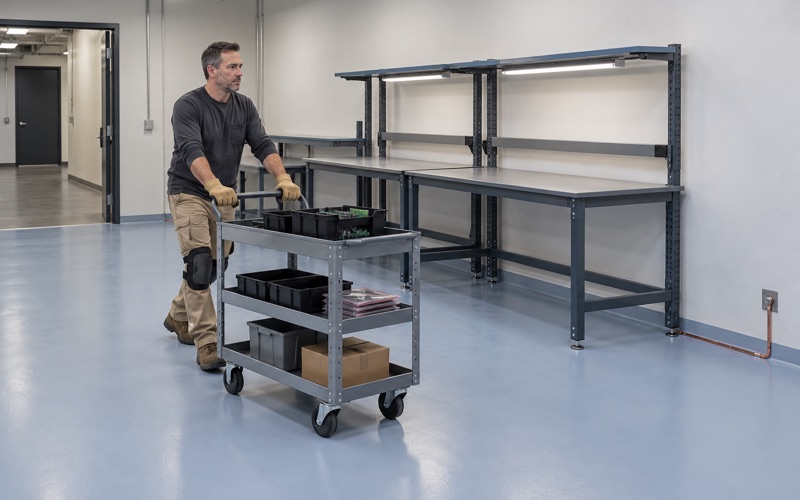
For rooms that see heavy wet cleaning, we typically propose 100% solids epoxy over a ground profile in the ICRI CSP range the product calls for. A vinyl flake or quartz aggregate broadcast goes into the base coat, and a polyaspartic or polyurea topcoat seals it. Cracks and control joints are filled with semi-rigid polyurea joint filler so the surface stays continuous across them.
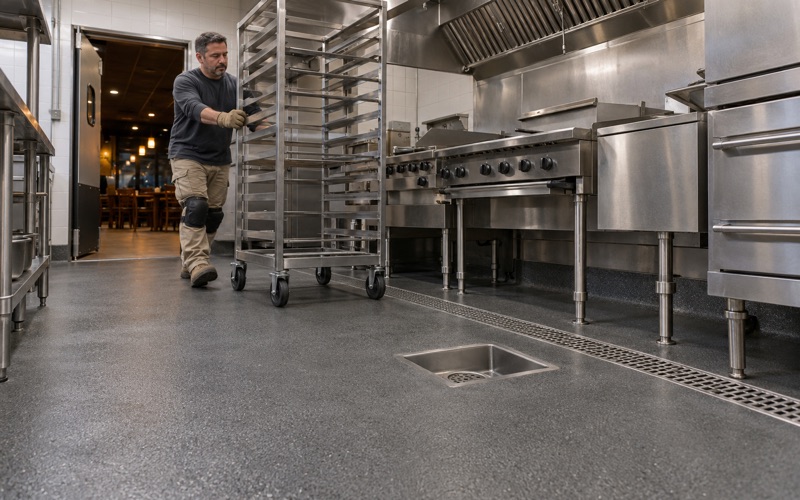
Where a kitchen runs hot water and steam cleaning every day, urethane cement is often the better base than epoxy. We say which system we are proposing for which room, and why, in the written scope.
The topcoat is chosen against the cleaning program, not the brochure. We ask the operator which disinfectants and floor cleaners the staff will use and how often, then check the topcoat’s chemical resistance against that list. A finish that dulls or softens under the center’s own sanitizer stops being washable in any useful sense.
Texture against cleanability
Staff carry children across these floors, so some texture underfoot is worth having. More texture also holds more soil and takes more scrubbing to get clean. We set that balance with the operator room by room rather than using one finish throughout the building.
Dust and fumes during a build-out
Grinding dust is collected at the grinder by an attached vacuum and never washed toward a floor drain. We choose coatings within the Illinois VOC limits for architectural coatings under 35 Ill. Adm. Code Part 223, which bind the installer as well as the manufacturer. Work is sequenced around the other trades and the hours a building has to stay open.
Kitchens, restrooms and diapering areas versus play rooms
Not every room in a childcare center belongs under a resin floor, and we say so before we bid. A seamless coating earns its place in the rooms defined by water, food and cleanup: the kitchen, restrooms, diapering areas, janitor closets, laundry and the entry where strollers and wet boots come in. Those floors are mopped hard and often, and a continuous coating with a cove base keeps the cleaning water on top of the floor.
Diapering areas deserve particular care at the edges. The base of a changing counter, the toe kick under a sink and the joint around a floor drain are where moisture and soil sit longest. We carry the coating and cove into those spots and seal around fixtures, because a seamless field with an open edge is not seamless where it counts.
Where cushioned flooring belongs
Play rooms, nap rooms and infant rooms where children sit, crawl and tumble are a different brief. A coating is a hard surface, and we do not present it as soft to land on or as protective for infants. Those rooms usually take a cushioned or resilient covering chosen by the operator and designer.
What we can offer there is the slab work underneath: grinding, crack repair and moisture testing, so whatever covering goes down is not laid over a damp slab. That is often the most useful thing a coatings contractor does in a classroom.
Kitchens and the county
A kitchen that prepares meals for children may also face food-service review, and the Cook County Department of Public Health is the health authority here; the village lists a Cook County health inspector among its consultants. We specify kitchen floors with the coved base and cleanable surface that food codes describe. Before we finalize the system, we confirm with the operator what the reviewing authority has asked for.
Before the job is scheduled
Illinois issues no state license for flooring or coating contractors, so we check the Village of La Grange Park’s own contractor registration, bond and insurance rules with its Department of Building and Inspectional Services before a job goes on the calendar. We also ask the department what a coating scope requires before we promise a schedule. Pricing is quoted per square foot for the system proposed in each room, so a center that coats its kitchen and restrooms but leaves its classrooms to another trade pays for exactly that.
- 20+ Years Coating Concrete
- Moisture Testing in Every Scope
- Free Written Estimates