Bolingbrook Epoxy Flooring has spent more than 20 years on epoxy flooring, and our work on epoxy flooring in Justice is shaped by floors that never get a day off. A firehouse apparatus bay is the clearest case: heavy rolling loads, water on the slab most of the year, and a schedule that cannot stop for a coating crew. This page covers how we approach that kind of floor, and the working shop floors that share its problems.
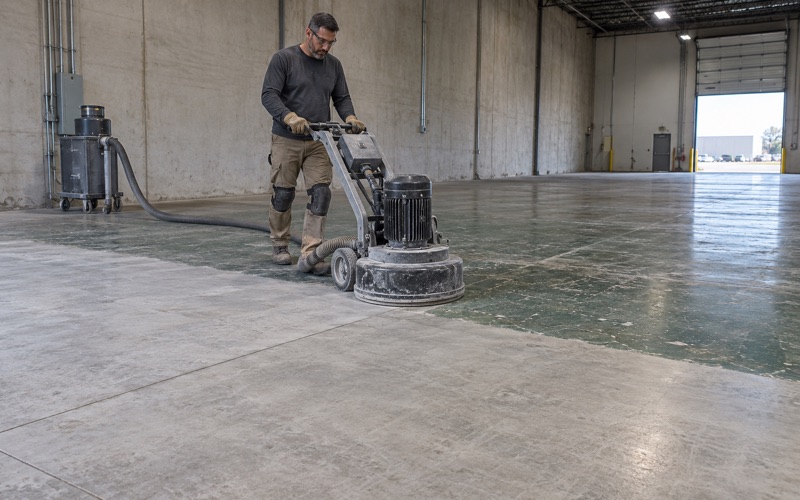
Every system we install starts the same way. The slab is opened with a diamond grinder or a shot blaster, never acid, until it reaches the surface profile the primer needs. Moisture testing is priced into the scope rather than sold after a blister appears, and the written proposal names the product, the system build and the finished thickness so the floor that goes down can be checked against the one that was quoted.
We also say early what a slab will not support. If joints are failing, an old coating is letting go or a section has heaved, we tell you it needs repair or replacement before any coating is worth the money. Warranty exclusions are read out before the job is signed, and moisture is the first one on the list.
Two Firehouses, Both Inside Justice
Justice has no fire department of its own. The Roberts Park Fire Protection District covers the village, and both of its firehouses stand inside village limits. The district traces its informal start to 1938 and its state charter to 1946, and it originally served much of what became Hickory Hills, Justice and Bridgeview.
For a coating contractor, that layout matters because the two houses do different jobs. One holds the district’s aerial truck and its administration; the other shares a wall with village hall and keeps the specialty vehicles. A floor plan for either one starts from what parks on it and what gets washed off it.
Station 1 on Roberts Road
Station 1 sits at 8611 S. Roberts Road, in the Lyons Township part of Cook County. The district dates the building to 1973, and an addition was built later to ease overcrowding. A Landmarks Illinois survey records it as a brick, flat-roofed government building with a deeply recessed entrance for the engines. The district staffs a tower ladder, an ambulance and a battalion chief there, and the building also holds the fire chief’s office, training, EMS and fire prevention.
Station 2 at the Village Hall
Station 2 at 7800 S. Archer Road is attached to the Village of Justice municipal building. The district staffs an engine and an ambulance there, and it is where the brush truck and the hazardous materials decontamination vehicle are stored. A bay that houses decontamination equipment carries a different cleanup load than one that only parks an engine.
What a Tower Ladder Asks of a Slab
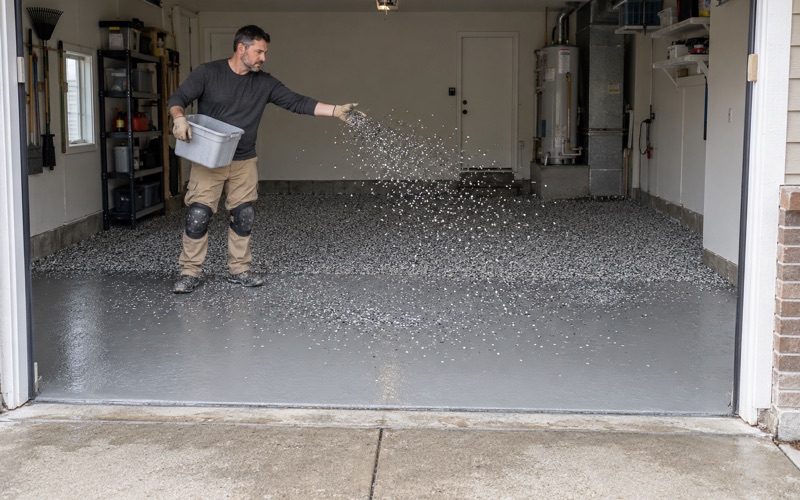
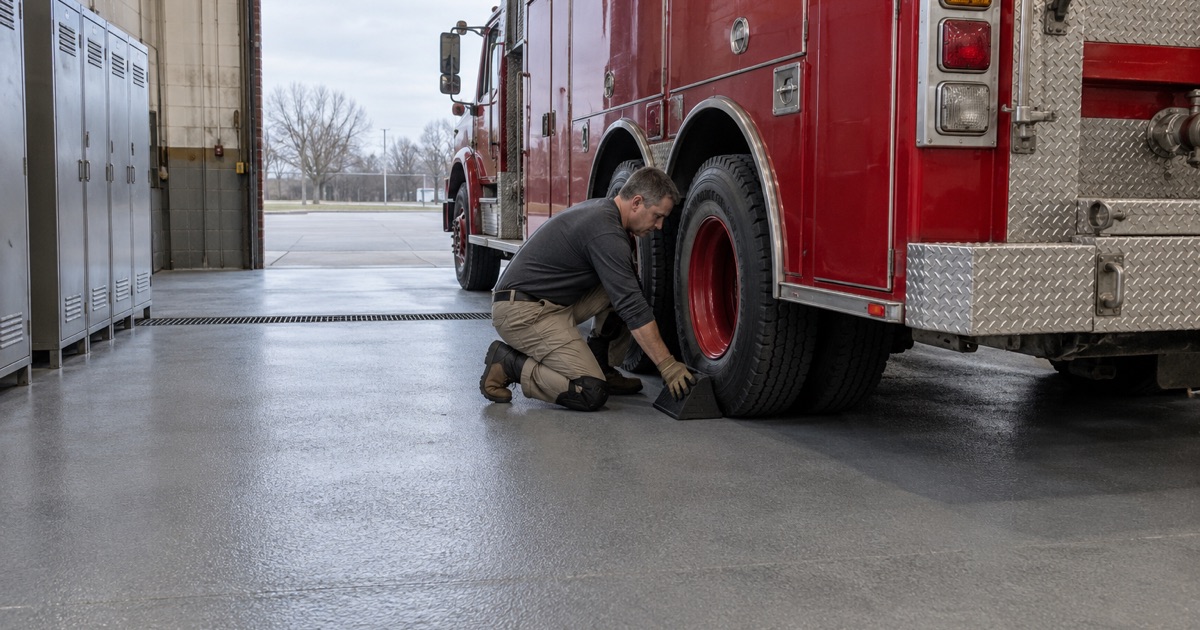
A loaded aerial truck puts its weight down through dual rear tires, and it lands in the same two tracks every time it backs in. Those tracks are where a thin coating wears through first, and where a tire still hot from a run can soften a weak topcoat and lift it, the failure the trade calls hot tire pickup. For bay traffic we build a 100% solids epoxy base with a quartz aggregate broadcast and a polyaspartic or polyurea topcoat, sized to the apparatus rather than to a garage spec.
We have not seen the floors in either Justice station, and nothing here describes their condition or any plan for them. It describes what any apparatus bay under that kind of truck asks of its floor.
Looking for epoxy-flooring closer to La Grange Park? See Epoxy-Flooring in La Grange Park.
Wash Water, Soot, Slush and Decon Runoff
An apparatus bay is a wet room for most of the year. Hose gets washed and hung, gear gets rinsed, trucks get washed down after runs, and every winter return brings slush and road brine in on the tires to melt across the slab. Diesel soot settles into all of it and turns the water into a gray film that porous concrete drinks in.
Why the Surface Has to Be Closed
Bare or lightly sealed concrete takes that water, and whatever is dissolved in it, into the top of the slab, where calcium chloride and rock salt work on the paste and soot stains for good. A fully bonded, seamless system keeps the liquid on top, where a squeegee can move it to a drain. Texture has to be chosen with care, because a floor rough enough for wet boots must still let a crew push water and grit off it at the end of a wash.
Slush is the part people underestimate. A truck back from a winter run can drop a sheet of brine across the full length of the bay, and it sits there until someone squeegees it, often hours later.
Joints, Drains and Edges
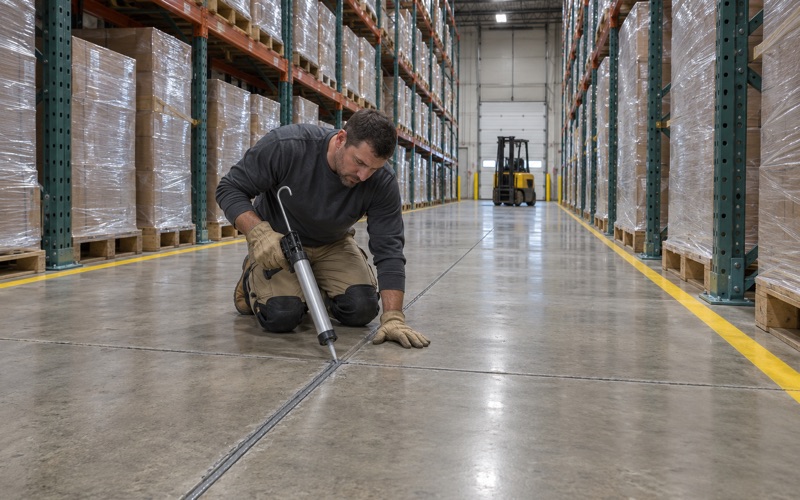
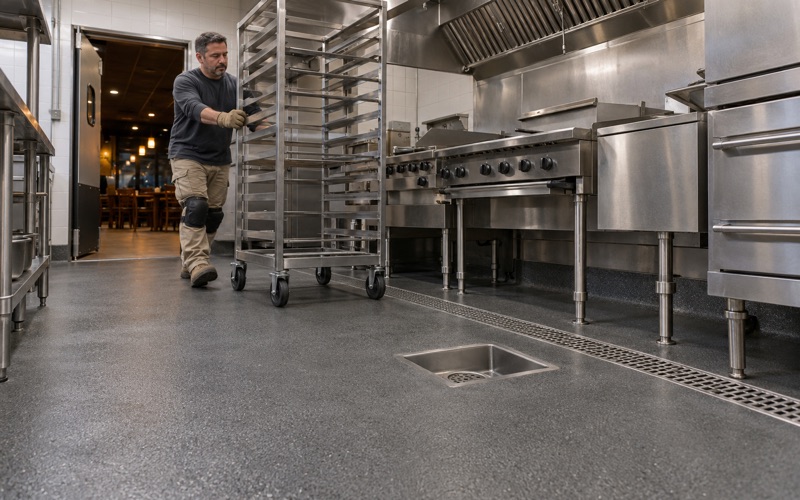
Control joints in a bay are where water finds its way down, so we fill them with a semi-rigid polyurea joint filler rather than bridging them with coating that will crack along the line. Around trench and floor drains, the coating ends in a keyed edge cut into the concrete so water cannot work underneath it. Where a wash area meets a wall, a coved base keeps runoff from sitting in the corner and creeping behind the system.
Decon and Gear-Cleaning Rooms
Rooms used for gear washing and decontamination see the harshest mix: detergents, rinse water carrying whatever came off the gear, and frequent hard scrubbing. For these we lean toward urethane cement, which handles thermal shock and chemical exposure better than standard epoxy, finished with an integral cove so the room can be washed down to the walls. We specify these rooms from the cleaning products actually used in them, so the system is matched to the chemistry it will see.
A decon room’s floor also has to show people where the clean side ends. A color change in the broadcast or the topcoat can mark the line between where contaminated gear comes in and where clean gear is kept, without painted stripes that wear away under boots.
Floor Work That Keeps Every Truck in Service
In a firehouse the apparatus has to be able to leave at any minute. That rules out the usual approach of clearing the whole floor, grinding it and closing it for days of cure. Bay work gets planned the way we plan a warehouse that has to keep shipping: in sections, with every truck parked on finished or untouched floor and a clear path to the door.
Phasing Bay by Bay
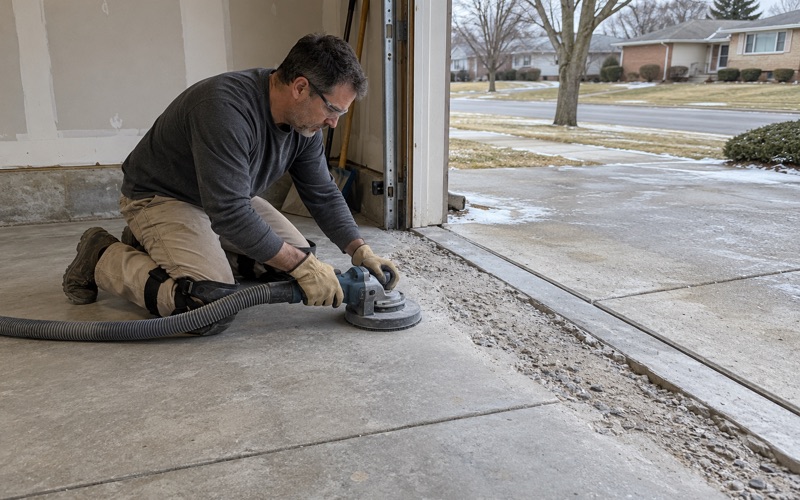
We split the job so one bay, or one half of a bay, is worked at a time while the apparatus sits in a stall that is not being coated. Grinding dust is collected at the grinder, so nothing is swept or washed toward a floor drain, and the station stays usable while the work runs. Fast-curing polyaspartic topcoats shorten the wait before a truck can roll back onto a finished section, though the base coats still get their full cure.
Before the first pass of the grinder, we walk the sequence with whoever runs the station: which stall each truck moves to, where hose and gear can be staged, and how the crew reaches the apparatus without crossing wet coating. The plan is written down, so a shift change does not undo it. If a call comes in, the truck leaves, and our crew works around the open stall.
Moisture and Temperature Before Anything Goes Down
A slab that has been washed down for decades can hold a lot of water, so moisture testing comes first, with ASTM F2170 in-situ relative humidity probes or ASTM F1869 calcium chloride tests depending on the slab. Where the readings call for it, a moisture-mitigation primer goes down before the build. Cure is timed against slab temperature and the dew point spread at the surface, because an open bay door on a cold night can put condensation on fresh coating and leave an amine blush the next coat will not bond to.
Permits, Registration and VOC Limits
Concrete work is a listed permit item with the Village of Justice Building Department, and the village requires every contractor working under a permit to be registered and bonded before that permit issues. Illinois issues no license for flooring or coatings work, so the village registration is the credential that counts, and we confirm it before a job goes on the schedule. Coatings for an occupied building like a firehouse are also chosen within the Illinois VOC limits for architectural coatings, which bind the installer as well as the manufacturer.
Truck Repair and Body Shops in the Industrial Park
Justice has no major industry; its small industrial park holds several truck repair and body shops among the village’s small businesses. Those floors share some of a firehouse’s problems, heavy tires and winter salt, but the daily wear is different: fluids, floor jacks, jack stands and creepers rather than constant wash water.
What a Repair-Shop Floor Takes
Oil, coolant, brake fluid and diesel land on the slab every day, and a jack stand concentrates a truck’s weight on a few small feet. We build these floors as a ground and primed 100% solids epoxy with a quartz broadcast for grip and a chemical-resistant topcoat, so spills wipe up instead of soaking in. Old oil in the concrete is a common reason a shop coating lets go, so we read the existing slab and say plainly when contamination has to be ground out before any system will hold.
Shop slabs in older buildings often carry patched trenches, saw-cut repairs and settled sections near the overhead doors. We map those before quoting and price the repair as its own line, because coating over a moving crack only paints the crack.
Body Shops and Bays That Keep Running
Body shops add sanding dust, solvents and a prep area that needs a floor which cleans down without holding grit. Most shops cannot close for a week, so we schedule around the hours the building has to run, using overnight and weekend windows and coating one bay at a time. Pricing is quoted per square foot for the specific system we propose, not taken from a national per-garage figure.
Whether the floor is a bay, a wash room or a repair stall, the order of work is the same: grind, test, repair, then build to a thickness written into the proposal. What changes from one Justice building to the next is the load, the chemistry and the hours the floor has to stay open, and those decide the system.
- 20+ Years Coating Concrete
- Moisture Testing in Every Scope
- Free Written Estimates