Bolingbrook Epoxy Flooring has installed commercial epoxy flooring for 20+ years in Bolingbrook, IL, serving surrounding cities including Lemont, Warrenville, Burr Ridge, Hinsdale and Shorewood. Commercial floors carry loads, chemicals and cleaning regimes a home garage never sees, so the system is specified from the conditions on the floor rather than picked from a brochure.
We start by reading the slab and talking through how the space is used: what rolls across it, what spills on it, how it is cleaned and when it can be closed. That shapes the preparation, the build thickness, the topcoat and the schedule, all of which are written into the proposal with a price per square foot.
The biggest difference from residential work is time. Most commercial floors cannot close for days, so we plan sections, overnight shifts and weekend windows before the first grinder is unloaded.
Commercial Floor Coating Systems
Epoxy Base With a Performance Topcoat
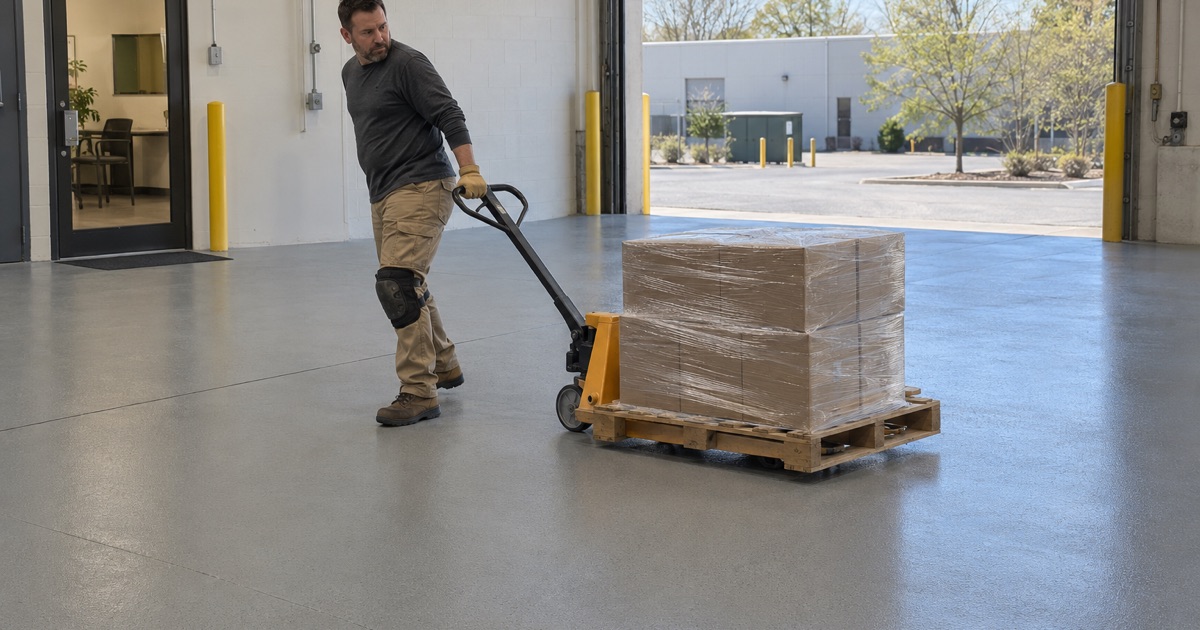
The workhorse commercial system is a 100% solids epoxy primer and body coat, often with a broadcast of quartz or flake, sealed with a polyurethane or polyaspartic topcoat. The epoxy provides bond and build; the topcoat provides abrasion, chemical and ultraviolet resistance.
Build thickness is chosen for the traffic. A light retail floor and a shop floor with pallet jacks get different builds, and the proposal states the finished thickness so you can compare bids on equal terms.
Quartz Broadcast Systems
Quartz aggregate broadcast into epoxy creates a textured, slip-resistant floor with color built in. It suits restrooms, locker rooms, corridors and commercial kitchens, where the floor is wet often and has to stay cleanable.
Urethane Cement
Where floors see hot water, steam cleaning or thermal shock, urethane cement outlasts epoxy. It also tolerates higher slab moisture than most coatings, which is useful on older commercial slabs with no vapor retarder.
Polished Concrete as an Alternative
Some commercial floors are better polished than coated, particularly large retail and warehouse spaces with no chemical exposure. We will recommend polishing where it fits, since there is no coating to wear through.
Floors We Coat for Businesses
Retail and Tenant Spaces
Storefronts and tenant spaces, from strip centers to the shops around The Promenade Bolingbrook, often need a new floor between tenants or during a refresh. We remove old adhesive and coatings, repair the slab and install a coated or polished floor inside the vacancy or closure window.
Auto Repair and Service Bays
Service bays see oil, coolant, brake fluid, hot tires and lifts anchored into the slab. A chemical-resistant topcoat over a thick epoxy base keeps fluids out of the concrete, and we coat around existing lift plates or coordinate anchor locations for new lifts so the floor is not drilled after it cures.
Hangars at Clow International Airport
Clow International Airport is owned by the Village of Bolingbrook, and its hangars hold aircraft that drip fuel and hydraulic fluid. Hangar floors get a chemical-resistant system in a light color, which reflects light under wings and makes leaks easy to spot before they soak into the slab.
Clinics, Offices and Institutional Floors
Medical offices, clinics and schools need floors that stand up to cleaning chemicals and rolling equipment. Seamless coatings with integral cove bases eliminate the seams and corners where dirt collects, and low-odor systems keep the building usable around the work.
Preparing Commercial Slabs
Shot Blasting and Diamond Grinding
Large open floors are prepared with a shot blaster, which profiles concrete quickly and collects its own dust, while edges, corners and small rooms are diamond ground. Both open the slab to the ICRI surface profile the system needs; we do not acid etch.
Moisture Testing
Older commercial slabs often have no vapor retarder under them. We test with ASTM F1869 calcium chloride kits or ASTM F2170 relative humidity probes and specify a moisture-mitigation primer where the readings call for one, since a coating failure on a large floor is an expensive surprise.
Joints, Cracks and Anchors
Control joints are filled with a semi-rigid polyurea joint filler in forklift and cart traffic, cracks are chased and filled, and old anchor holes and trenches are patched. A sound, continuous slab is what lets the coating carry commercial loads.
Scheduling Around a Working Building
Phased, Overnight and Weekend Installs
We divide floors into phases that let the business keep running, often working nights or weekends. Fast-curing polyaspartic topcoats can return a section to foot traffic the next morning.
Code, Health and VOC Requirements
Illinois issues no state license for flooring work, so we confirm the registration, bond and insurance rules of the village where the building sits. Floor coatings are chosen within the Illinois VOC limits, which bind the applicator as well as the manufacturer, and food businesses are specified to pass Will County Health Department plan review.
Living With a Commercial Coating
Cleaning and Maintenance Plans
A coated commercial floor is only as good as the cleaning that follows. We hand over cleaning instructions matched to the topcoat, including which cleaners and scrubber pads to use and which to avoid, because some degreasers and aggressive pads dull or soften certain topcoats over time.
For floors with automatic scrubbers, we choose a texture that grips without trapping dirt, so the machine can clean it in one pass. Too much grit traps dirt in the low points, while too little leaves a wet floor slick.
Recoating Before the Base Wears Through
Traffic lanes, doorways and turning areas wear first. When the topcoat in those areas starts to dull, a scuff-sand and fresh topcoat restores the floor without regrinding the whole slab, as long as it is done before the base coat is exposed.
We can mark those high-wear zones on a floor plan at handover, so a facility manager knows where to look and when to call. Catching wear early keeps the cost to a fresh topcoat rather than a full system.
What a Coating Warranty Excludes
Commercial coating warranties typically exclude moisture and hydrostatic pressure from below the slab, new cracking from slab movement, chemical exposure outside the product’s rating, and impact or gouging from equipment. We read those exclusions to you before the job is sold, starting with moisture.
- 20+ Years Coating Concrete
- Moisture Testing in Every Scope
- Free Written Estimates