Bolingbrook Epoxy Flooring has handled epoxy flooring in Chicago Ridge and the rest of the southwest suburbs for more than 20 years, and a good share of that work happens below grade, in basements where the only way out for water is a drain in the floor. On most coating jobs that drain is an afterthought. It stops being one in the weeks when the pipe it feeds is being worked on.
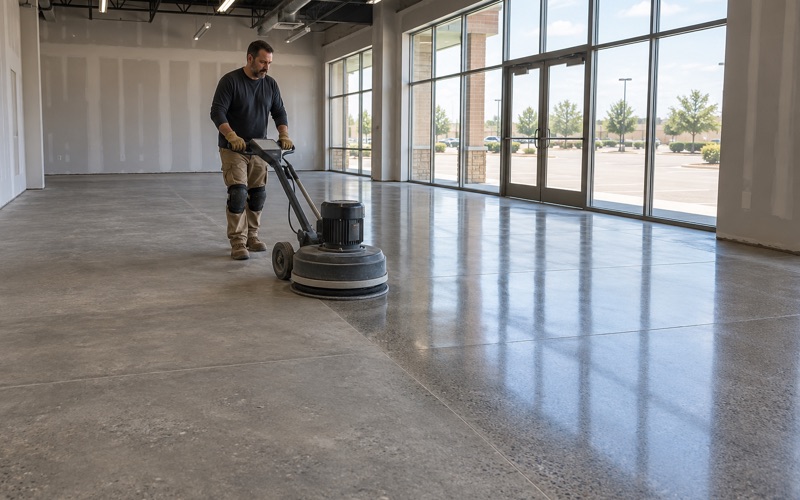
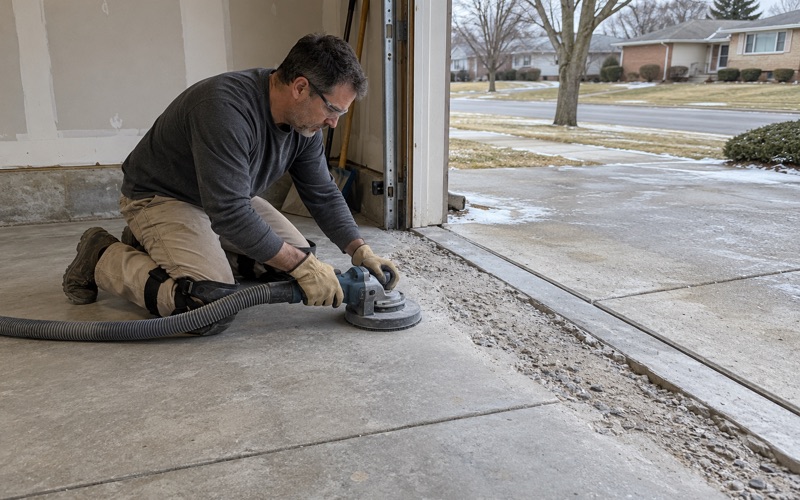
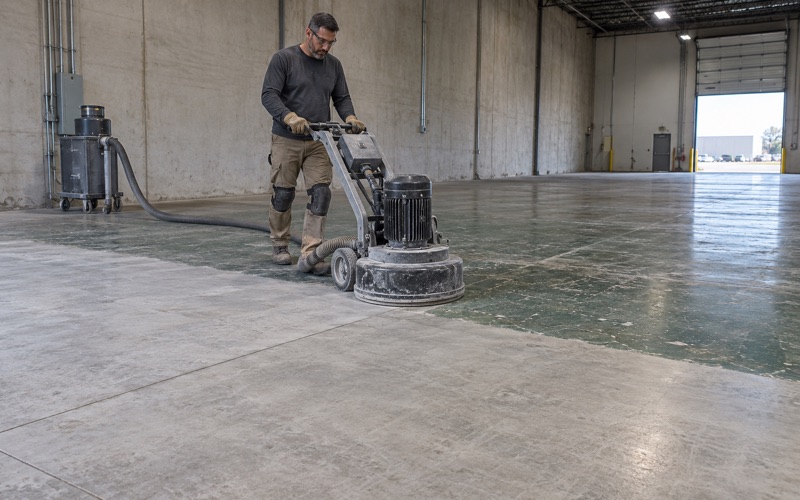
Our basement and garage prep is mechanical. A diamond grinder or shot blaster opens the slab, the dust goes straight into a vacuum at the tool, and nothing is rinsed. We do not acid etch, and we do not pressure wash a floor we are about to coat, which means our prep sends no water toward a floor drain at all.
Before we quote, we look at the cracks, the joints and any old paint or sealer, and we put moisture testing in the written scope as its own line item. The proposal names the product, the system build and the finished thickness. If a slab needs repair before it can take a coating, we say so first.
Chicago Ridge Is Lining Its Sewers From the Inside
Rather than digging up streets to replace aging sanitary mains, the Village of Chicago Ridge has been relining them in place. The method is cured-in-place pipe (CIPP) lining: a resin-saturated liner is fed into the existing pipe and cured there, forming a new pipe inside the old one. The street stays largely intact, but while a liner is going in, the sewer under that block is not in normal service.
The 2025 phase and its streets
The village’s 2025 Sanitary Sewer Lining Project covered select sanitary pipes along 99th Street, 99th Place and 100th Street between Sayre Avenue and Harlem Avenue, and along Nottingham Avenue between 100th Street and 99th Place. Work was set to begin the week of November 17, 2025, with completion anticipated in mid-December. The contractor was National Power Rodding Corporation, staging at different times and locations along the route.
That is the phase we have read, and we cannot tell you which blocks a later phase will reach. The useful habit is to check what the village has posted before a basement floor goes on the calendar. Questions about the sewer work itself go to the village’s Director of Public Works, since we are a flooring contractor with no part in it.
The timing of that phase is worth noticing. Mid-November to mid-December is when plenty of homeowners try to finish a basement project before the holidays, and a lining window on the same block can land in the middle of it. A week of overlap is easy to plan around when it is known in advance and awkward when it is discovered on install day.
What the village asks of residents on a lining block
The notice was plain about the household side. It warned of a possible temporary disruption to sanitary services and potentially water services, and asked residents to limit their use of shower, laundry, toilet and general water use once installation of the liners had begun. The contractor hands notices to the impacted properties, so the door notice, not a general announcement, tells a household its own window.
For most homes that means a few days of shorter showers and postponed laundry. For a house with a basement floor job on the schedule, it raises a practical question. Does the work planned for that slab need the drain?
Looking for epoxy-flooring closer to Lyons? See Epoxy-Flooring in Lyons.
Where Basement Floor Prep Water Goes
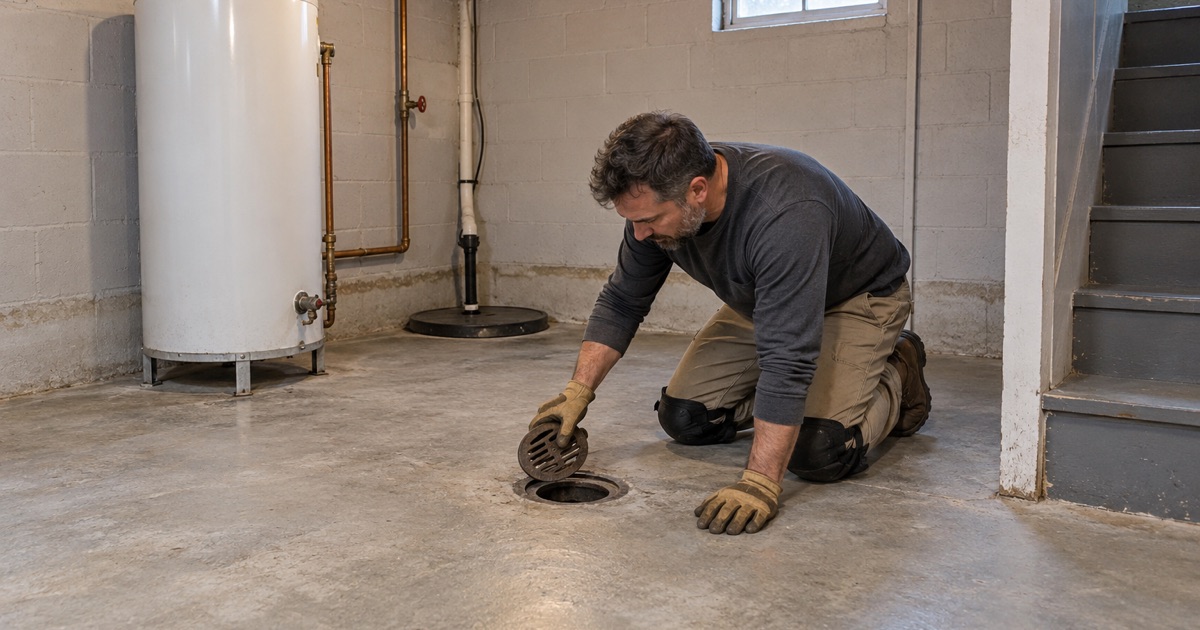
In most basements, a floor drain near the furnace or the laundry carries water to the sanitary sewer. Any floor prep that uses water ends up there: pressure washing an old coating, rinsing a slab after acid etching, or squeegeeing wet-grinding slurry toward the grate. During a lining window that water has nowhere useful to go, and sending gallons of rinse down a drain the village has asked you to rest works against the request.
Wet prep and the lining window
Acid etching is the step that uses the most water. Acid is spread on the slab and scrubbed, then rinsed and neutralized, often more than once, and all of that rinse heads for the floor drain. Wet grinding leaves a gray slurry that has to be washed off, and pressure washing a basement floor is mostly a fast way of moving water toward the drain.
We avoid all three on every slab, lining or not. Etching gives an uneven profile that is hard to measure and leaves moisture in the concrete right before a coating goes down. If a quote you are comparing lists an etch-and-rinse step for a basement, ask where the rinse water goes during a lining week.
Dry prep, collected at the tool
Our prep is shot blasting or dry diamond grinding with a vacuum attached at the tool, which brings the slab to the ICRI CSP profile the chosen system calls for without any rinse water. Grinding dust is collected as it is made and never washed toward a floor drain or storm inlet. Crack repair, joint filling with semi-rigid polyurea and the coating itself are dry steps too.
Or a different week
Some households would still rather keep a crew out of the house while traffic control is up and the plumbing is on a reduced schedule. That is a reasonable call, and moving an install a few weeks is usually simple. What we will not do is guess: we read the contractor’s door notice with the homeowner and book around the dates it gives.
A lining week does not have to stop everything, either. Moisture testing can run while the street is being worked on, since a calcium chloride dome or a set of humidity probes needs time on the slab and no plumbing at all. The readings are then in hand when the sewer is back in normal service and the coating is ready to go down.
Odors, Traps and the Floor Drain
The village noted odors from the lining process, and its traffic control was set up partly to keep the public away from them. The notice says nothing about drains backing up or about odors affecting a floor, and we make no claim about either. What we can speak to is the floor drain itself, because a coating job changes how a basement drain is handled for a few days.
Keeping the trap filled
A floor drain holds a small pool of water in its trap, and that water is what keeps sewer air from rising into the basement. A drain that rarely sees water can dry out, especially in a furnace room through a heating season. Pouring a little water into a seldom-used floor drain before a lining window starts refills the trap without asking anything meaningful of the sewer.
Coating around the drain
We coat up to the drain body, not over it, and leave the grate removable so the trap can be checked and topped up once the floor has cured. Masking keeps resin out of the opening during the install. If a household notices a smell during lining week, a dry trap is one of the first things worth checking.
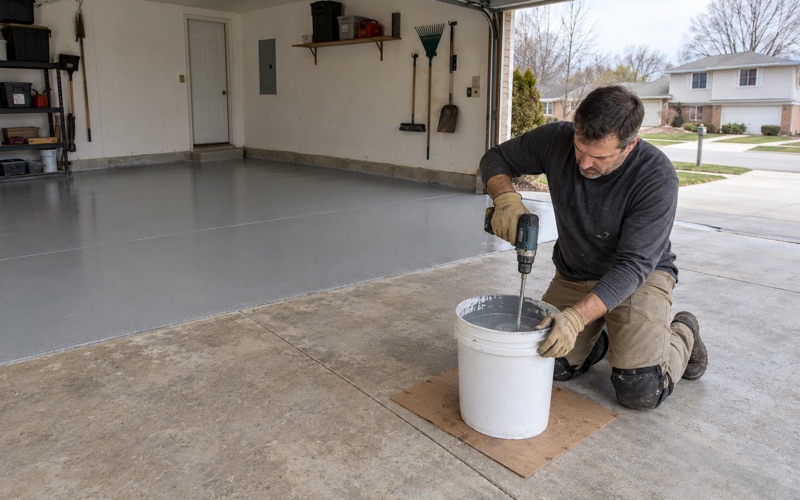
Our own crew draws almost nothing from the house plumbing on a coating day. Resin components are mixed without water, tools are cleaned with the solvent the product calls for rather than at a laundry sink, and waste leaves in sealed containers instead of going down a drain. On a block under a water-use request, that keeps our share of the household load close to zero.
Ventilation and cure
A fresh coating needs air movement while it cures, and we plan basement ventilation on every job. The coatings we install stay within the Illinois VOC limits in 35 Ill. Adm. Code Part 223, which bind the installer as well as the manufacturer. Cure is scheduled against slab temperature and the dew point spread at the surface rather than the calendar, and a heated basement in late fall usually holds steadier conditions than an unheated garage.
Basement and Garage Floors in Chicago Ridge’s 1950s-1980s Houses
Chicago Ridge grew fast after the war, from 888 residents in 1950 to 5,748 in 1960 and 14,127 by 2000, and its housing shows it. Census estimates put a thousand or more of the village’s homes in each of the 1960s, 1970s and 1980s, with close to another thousand from the 1950s. A slab of that age has usually seen decades of use and may carry an earlier paint or sealer.
Most of the village’s detached houses are lived in by the people who own them. Of roughly 1,949 detached houses, about 1,833 are owner-occupied, and in those homes a basement or garage floor is usually the owner’s own decision and the owner’s own schedule to protect.
Older slabs and earlier coatings
A basement floor from that era may have been painted once or twice, sealed, or tiled and later stripped. We read what is there before quoting, check whether the old coating is still bonded, and grind it off when it will not hold a new system. Where cracks or settled sections mean the slab needs repair first, that goes in writing before anything else.
Old floor tile turns up in basements of this age, and the adhesive under it has to come up completely before a coating can bond. We remove it mechanically as part of the prep rather than softening it with water or strippers that would need rinsing.
Moisture under an older basement slab
Houses of this age may predate a reliable vapor retarder under the slab, so we test rather than assume. A plastic sheet test under ASTM D4263 gives a first read, and in-situ relative humidity probes under ASTM F2170 or an ASTM F1869 calcium chloride test give numbers we record in the scope. None of these tests uses water, and where readings run high, a moisture-mitigation primer goes into the system and moisture is the first exclusion we read out in the warranty.
Garages and the paperwork
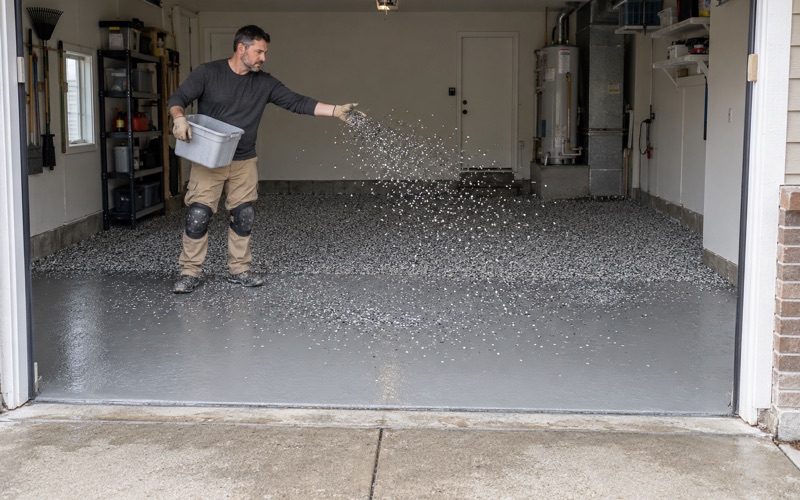
Garages get the same mechanical prep, with a 100% solids epoxy base and a polyaspartic topcoat chosen to stand up to rock salt, calcium chloride brine and hot tire pickup through a Chicago-area winter. Every home job comes with a written contract and the Home Repair: Know Your Consumer Rights pamphlet, as the Illinois Home Repair and Remodeling Act requires. Prices are quoted per square foot for the system we actually propose.
- 20+ Years Coating Concrete
- Moisture Testing in Every Scope
- Free Written Estimates