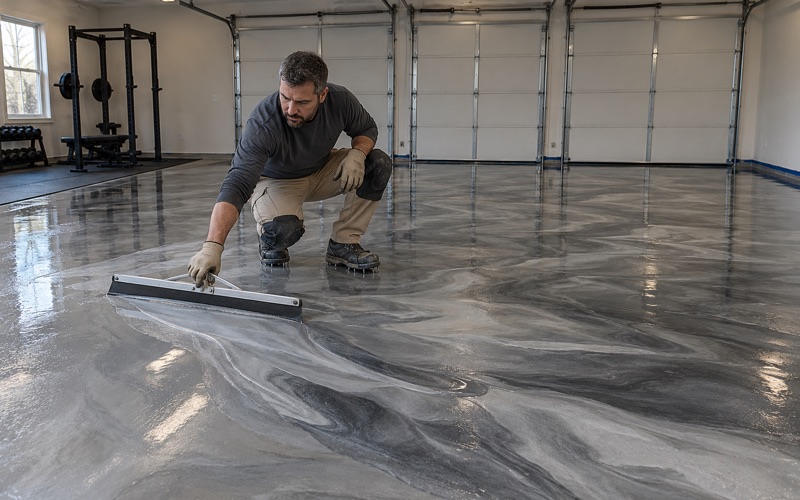
Bolingbrook Epoxy Flooring has handled epoxy flooring in Bellwood basements for owners who have learned, usually the hard way, what a flood claim leaves behind. After more than 20 years of coating concrete, we have stood on a lot of slabs where the furnace was replaced and the floor covering was simply gone. That gap between what gets paid for and what gets rebuilt is the reason this page exists.
Most of the basement calls we take start with a question about cost, and the honest answer depends on what happens to the floor the next time water comes in. A finish that has to be pulled up, bagged and hauled out is a finish you may buy more than once. A finish bonded to the concrete itself can often be pumped off, washed, dried and kept.
We do not sell a coating as a way to keep water out, and nothing on this page should be read that way. What we can do is help you choose a basement floor that survives the cleanup, and explain why that choice matters more in this village than in most.
What a flood policy pays for below grade
Before choosing a basement finish, it helps to know where the National Flood Insurance Program draws its lines. FEMA laid them out in a January 2022 fact sheet titled “What Does Flood Insurance Cover in a Basement?”, and we quote it here because the wording decides who pays for the floor. We are flooring installers, not insurance agents, so treat this as a reading of FEMA’s own document rather than advice about any particular policy.
Where the basement line falls
The NFIP defines a basement as any area of a building with a floor below ground level on all sides. FEMA notes that the lower levels of split-level buildings may still count. That matters for owners who think of a lower family room as a ground floor, because the policy may not see it that way.
Once a space counts as a basement, coverage narrows sharply. The Standard Flood Insurance Policy pays for a specific list of building items and for cleanup, not for the room as it was finished.
Covered: the equipment, the pumping and the drying
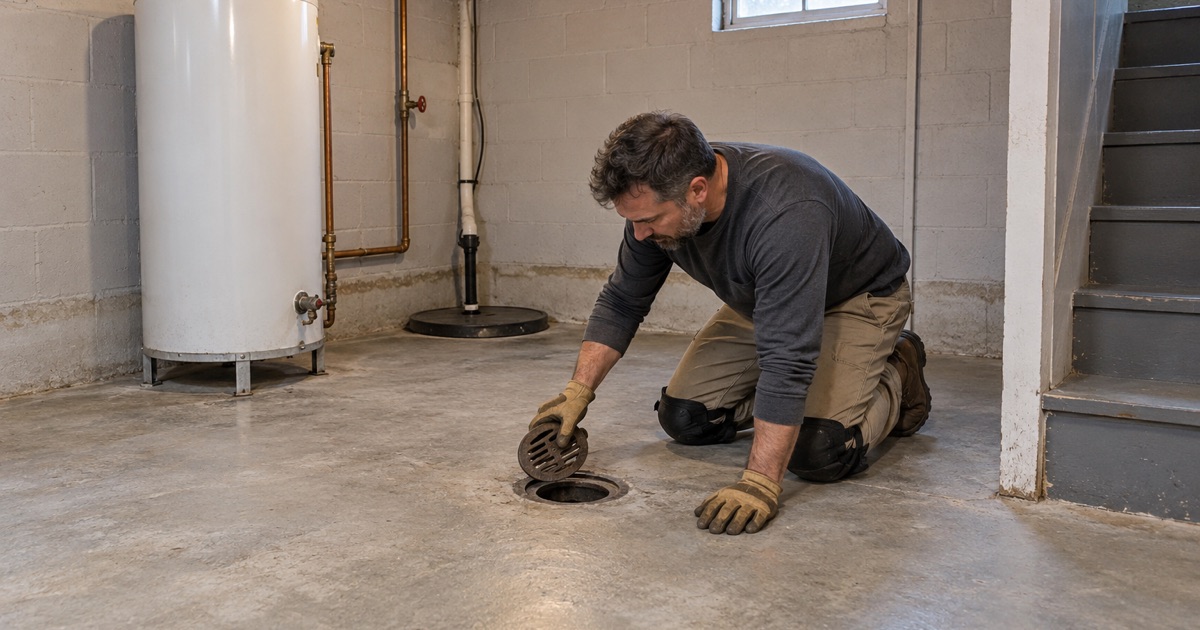
The covered examples in the fact sheet are largely mechanical. Furnaces and water heaters, sump pumps, central air conditioners, electrical outlets, switches and breaker boxes all appear, along with unfinished and un-taped drywall, attached stairways and foundation elements.
Cleanup is on the list too. FEMA says it can include pumping out floodwater, mold and mildew treatment, and structural drying of salvageable foundation elements. In plain terms, the policy helps get the water out of the concrete and the room dried down to its structure.
None of that rebuilds the room. It returns the space to a dry structure with working equipment, which is the starting point for whatever floor goes back down.
Looking for epoxy-flooring closer to Northlake? See Northlake Epoxy-Flooring.
Finished flooring and the cost of tearing it out
The other half of the fact sheet is the part most owners never read until after a claim. It lists excluded items, and the flooring is among them.
The exclusion in FEMA’s own words
FEMA names “Basement improvements (such as finished flooring, finished walls, bathroom fixtures, and other built-ins)” as excluded. That means the floor covering itself is typically outside basement coverage, whatever it cost to install. Replacing it after a flood is generally the owner’s expense.
The fact sheet goes a step further on removal. It says policies “do not pay for removal of non-covered building or personal property items, even if the removal of these items facilitates cleanup of covered building repairs, such as the removal of carpet installed inside a basement.”
Why a soaked carpet costs twice
Read those two sentences together and the arithmetic is uncomfortable. Wet carpet and pad have to come out before the slab can dry, the labor to pull them is not paid for, and the replacement is not paid for either. A floating floor or glued-down sheet goods that trap water against the concrete raise the same problem.
So the owner pays once to get rid of the ruined floor and again to put a new one down. Then the next storm can repeat the cycle on the same slab.
Where a slab coating sits
We want to be precise here, because this is where sales pitches go wrong. The fact sheet does not say whether a coating applied to the slab counts as finished flooring, and we have not seen that question settled. We will not tell you an epoxy floor is paid for after a flood, and you should be wary of anyone who does.
What we can say is practical rather than contractual. A bonded coating is part of the concrete surface, so there is usually nothing to tear out and carry up the stairs before the drying can start.
Repeat losses in a village that counts 240 of them
The exclusion matters everywhere, but it matters more where basements take water again and again. Bellwood’s annex to the 2024 Cook County multi-jurisdictional hazard mitigation plan puts numbers on that.
What the hazard plan counts
FEMA identifies 240 repetitive-loss properties in Bellwood, and 231 of them are single-family homes. Five more are classed as severe repetitive loss, all single-family. The count of mitigated properties is zero.
The village ranks flood first in its own hazard ranking, ahead of tornado and severe winter weather. It also describes an extremely large floodplain area susceptible to Addison Creek flooding, and notes that Washington Boulevard floods regularly. Not every home here has flooded, but a repeat-loss basement in this village is not a rare case.
No discount, no mitigation, the same floor
Bellwood is not a Community Rating System participant, so local flood policies carry no CRS premium discount. Combine that with none of the 240 properties mitigated, and the pattern for an affected home is clear enough. The basement may flood again, and the floor finish is likely to be the owner’s own loss each time.
That is why we steer basement owners toward a floor they expect to clean rather than replace. It does not change the odds of water arriving, but it changes what the cleanup costs.
Repairs after flood damage are also tracked against the substantial-improvement definition in Chapter 152 of the village code, which is triggered by work costing 50 percent of market value. A floor coating on an existing basement sits far below that threshold on its face. When it is one piece of a larger post-flood repair, the Building Department is the office that keeps the running total.
Documenting the basement before the next flood
Whatever floor you choose, photograph the basement while it is dry. Capture the furnace, water heater, sump pump, breaker panel and stairway, plus the floor and its condition. Note where water entered last time and how high it reached, if you know. FEMA’s list of covered items is what a claim gets measured against, and clear photos of those items in good order are easier to produce now than after a storm.
Keep the proposal for your floor with those photos. Ours names the product, the system build and the finished thickness, which gives you a record of exactly what went down on the slab.
A floor you can hose, dry and keep
A bonded basement floor is not a defense against water. It is a choice about what is left standing after the water is pumped out and the fans have run.
We price it plainly, too. Quotes are per square foot for the system we actually propose rather than a national figure lifted from a garage ad, so you can weigh the cost against what another tear-out would run.
How we build a basement floor that has to survive cleanup
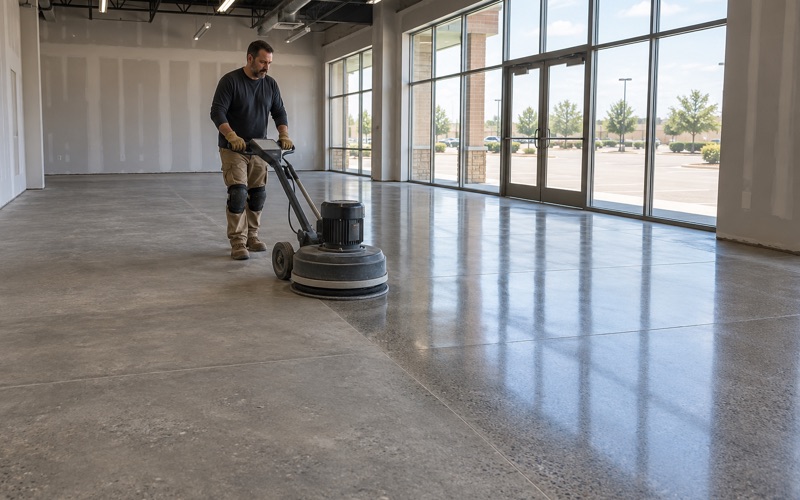
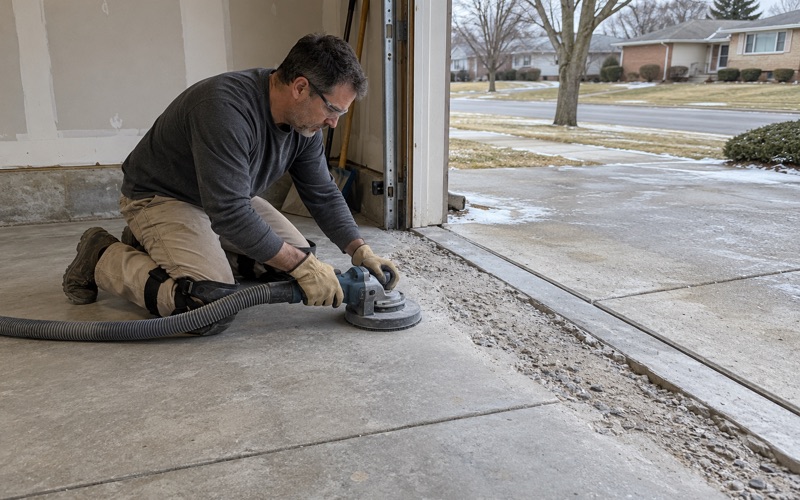
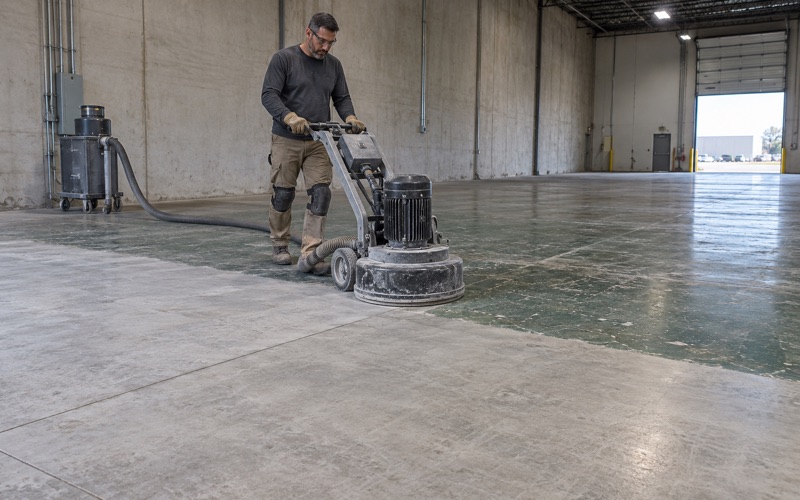
We open the slab mechanically with a diamond grinder or shot blaster to the ICRI CSP profile the system calls for, and we never acid etch. Grinding dust is collected at the machine and kept out of the floor drain and the sump. A basement slab that has flooded has often been wet for long stretches, so we test it with ASTM F2170 in-situ relative humidity probes or ASTM F1869 calcium chloride kits as a priced line in the scope.
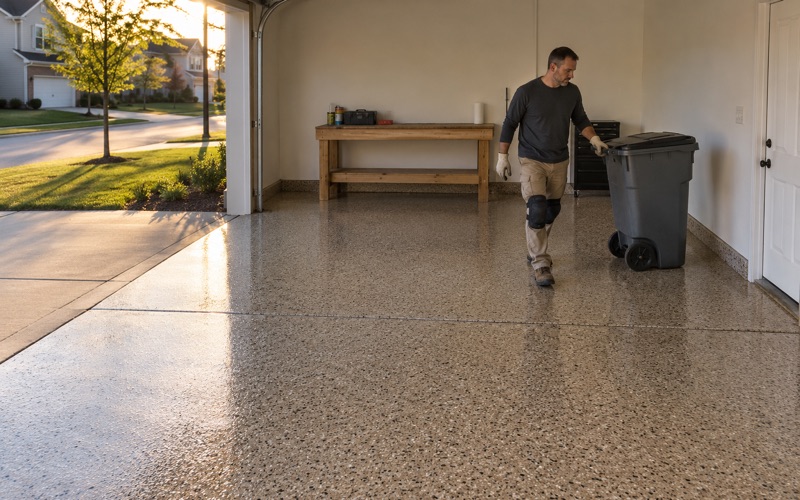
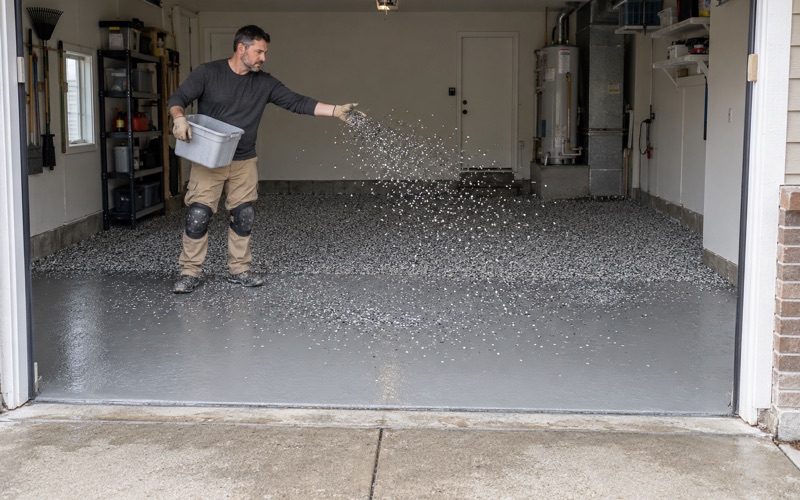
When the readings call for it, a moisture-mitigation primer goes down first, followed by 100% solids epoxy and a vinyl flake or quartz aggregate broadcast with a polyaspartic topcoat. We look at cracks, joints and any old coating before quoting, and we say plainly when the concrete needs repair before it can be coated. Moisture is the first warranty exclusion we read out, before anything is signed.
What cleanup looks like on a coated slab
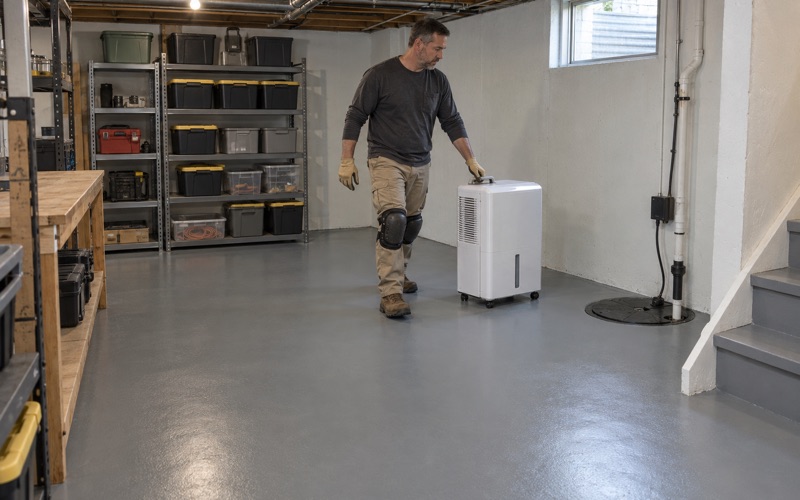
After water recedes, a coated floor is typically squeegeed toward the drain, washed with a mild detergent and dried with the same air movers the structural drying already uses. There is no pad to pull and no seam where water has wicked underneath. Where a coating has lifted, that area is a repair, not a whole new floor.
Curing gets the same care on the way in. We schedule it against slab temperature and the dew point spread at the slab surface rather than the calendar, because a cool, damp basement can invite amine blush on fresh epoxy. If the room needs more time to dry down, we say so and wait.
Every home job gets a written contract and the state’s Home Repair: Know Your Consumer Rights pamphlet before work starts. Illinois issues no license for coatings work, so we confirm the Village of Bellwood’s own contractor registration, bond and insurance rules before a job goes on the schedule.
Questions for your agent before you choose a finish
Ask whether your basement meets the NFIP basement definition, especially if the house is a split-level. Ask how a bonded slab coating would be treated next to the finished-flooring exclusion, and get the answer in writing. Ask what records your insurer wants for the covered equipment, so the photos you take this week match what a claim would ask for.
Bring those answers to the estimate, and we will price a basement floor around them. The goal is a slab you can wash, dry and walk on again, rather than one more load of wet flooring hauled to the curb.
- 20+ Years Coating Concrete
- Moisture Testing in Every Scope
- Free Written Estimates