Bolingbrook Epoxy Flooring has coated basement floors for 20+ years in Bolingbrook, IL, and our basement floor epoxy work serves surrounding cities including Lemont, Warrenville, Burr Ridge, Hinsdale and Shorewood. On a basement job, moisture is the first question rather than the last, because a below-grade slab sits against soil on every side and a coating only lasts as long as the concrete under it stays within the product’s limits.
So the first visit includes a moisture test, priced as a line in the scope. The result decides the system: a standard primer on a dry slab, a moisture-mitigation primer on one pushing vapor, or a recommendation to fix a water problem before anything is coated.
We also read cracks, efflorescence, old paint and the sump and drain layout, and the written proposal names the product, the build and the finished thickness. If a slab is not a candidate for coating, we say so on that first visit.
Moisture Comes First in a Basement
Testing the Slab
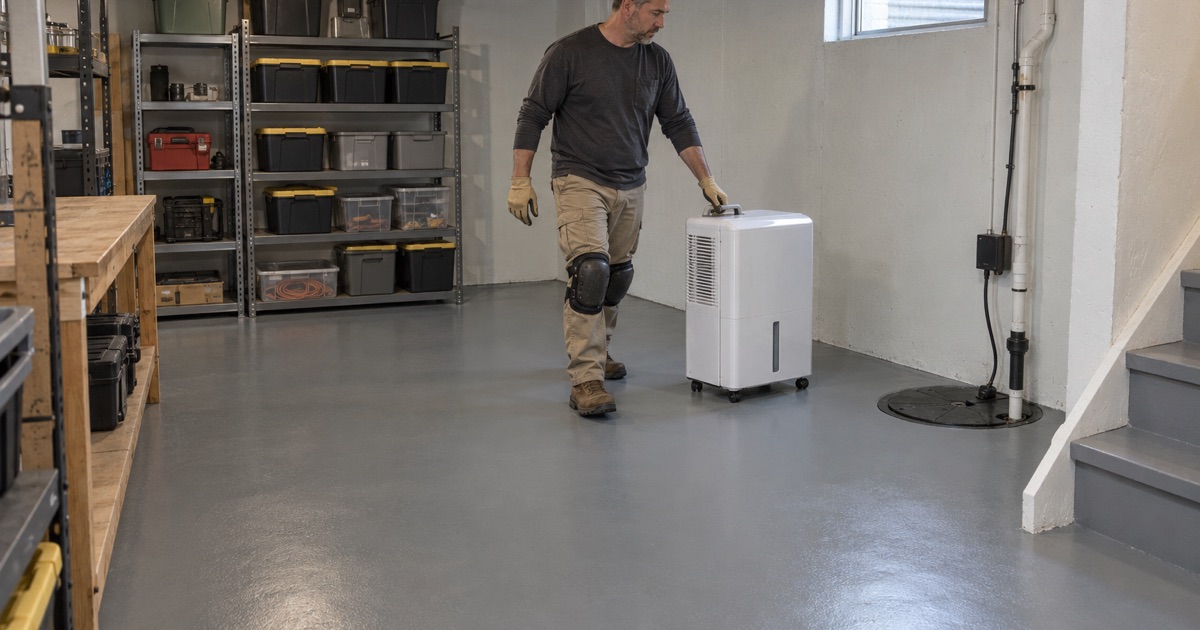
We test basement slabs with ASTM F2170 in-situ relative humidity probes, set into the slab to read conditions inside the concrete, or with an ASTM F1869 calcium chloride test, which measures the vapor emission rate at the surface. A plastic sheet taped to the floor under ASTM D4263 can show a problem, but a dry result proves little, so we never rely on it alone.
The readings are compared against the limits the coating manufacturer publishes. Above them, the floor needs a mitigation primer or a different system; within them, a standard epoxy primer and base coat go down.
Vapor Versus Water
Vapor moving through a slab is normal and can be managed with the right primer. Liquid water is another matter: water entering at the cove joint, through cracks, or up under hydrostatic pressure when the soil around the foundation is saturated cannot be stopped by a floor coating.
Where we see signs of liquid water, such as tide lines, wet cracks or standing water after rain, we recommend drainage or waterproofing work first and come back to coat when the slab is under control.
Efflorescence
The white, powdery deposit on many basement floors is efflorescence, mineral salts carried to the surface by moving water and left behind when it evaporates. It is ground off before coating, but its presence tells us moisture is moving through that slab, and it usually points us toward a mitigation primer.
Efflorescence that keeps coming back after it is brushed away also tells us the moisture is ongoing rather than left over from one wet spring. A coating laid over a slab like that without a mitigation primer tends to lift in the same spots where the white powder used to collect.
Radon Is a Separate Job
Sealing a basement slab is sometimes sold as a way to lower radon, and we do not sell it that way. Illinois requires a state radon mitigation license from IEMA for any work that reduces radon in a home, in whole or in part. If your test result is high, a licensed mitigator installs the system first, and we coat the floor around the pipe afterward.
Building a Basement Floor System
Grinding and Removing Old Finishes
Basement floors often carry old paint, sealers, carpet pad glue or tile adhesive. We grind all of it off with diamond tooling down to bare, profiled concrete, collecting the dust at the grinder so it does not spread through the house.
We never acid etch a basement floor. Etching floods the slab with water and acid right before a moisture test, and it leaves a weak surface layer that the coating bonds to instead of sound concrete.
Moisture-Mitigation Primers
A moisture-mitigation primer is an epoxy built to cut the vapor transmission of a slab that tests above a coating’s limits. We name the product in the quote and apply it at the thickness its maker requires, since a thin coat does not deliver the rated reduction.
The primer becomes the base of the system, and the color coat, broadcast and topcoat go over it as they would on a dry slab. What changes is the price and the cure schedule, both of which appear in the proposal before you agree to anything.
Cracks, Sump Pits and Drains
Cracks are routed and filled so they do not telegraph through the coating, and we look for displacement that suggests movement. The coating is terminated cleanly at the sump basin and floor drain, with the slope to the drain preserved and the sump lid left removable for service.
Finish Options for a Basement
Most basement floors get a flake broadcast, which hides imperfections and adds texture, or a solid color for laundry and utility rooms. Metallic epoxy suits a finished rec room or bar area, and quartz broadcast gives extra grip near a walkout door.
Basement lighting is usually low, so lighter base colors and flake blends make the space feel brighter. We bring sample boards down to the basement itself rather than choosing colors under showroom lights.
Rooms We Coat Below Grade
Laundry and Utility Rooms
Laundry rooms see detergent spills, washer leaks and lint. A coated floor wipes clean and keeps small leaks on the surface where they can be spotted, rather than soaking into bare concrete.
We coat under and behind where the washer and dryer sit, then let the floor cure before the machines go back. A slight texture in the topcoat helps in front of a utility sink, where wet feet and spilled detergent meet.
Workshops and Storage
Basement workshops get dropped tools, oil and paint drips. A thicker build with a chemical-resistant topcoat keeps stains out of the concrete and makes sweeping up sawdust easier.
Storage rooms benefit in a quieter way. Plastic bins and boxes set on a coated floor do not pick up the dust that bare concrete sheds, and a small leak from a water heater shows on the surface instead of disappearing into the slab.
Home Gyms and Rec Rooms
A home gym needs a floor that handles rubber mats and dropped weights, so we raise the build thickness where the weights land. Rec rooms and bars often take a metallic or flake finish that turns the basement into living space.
Floors After a Flood or Backup
After water gets into a basement, the slab can stay wet inside for weeks after the surface dries. We wait for testing to show it has returned to range, clean off any residue left by sewer water, and grind before coating, so water is not sealed into the concrete.
If the water came in because of a failed drain, a sump pump or a seepage path at the wall, that repair comes first. Coating a floor in a basement that will flood again only gives the next backup a nicer surface to cover, so we ask what caused the water before we schedule anything.
Walkout and Garden-Level Basements
A walkout basement has one wall at grade, and the floor near that door sees boots, snowmelt and patio grit. We add a quartz or fine aggregate broadcast to the topcoat in that zone for traction, and carry the coating cleanly to the door threshold so water tracked in stays on the surface.
What Affects Basement Floor Pricing
The Moisture Result
The moisture test moves basement pricing more than anything else. A dry slab with a flake system is at the lower end; a slab needing a mitigation primer adds material and labor that we show as its own line.
Repair and Removal
Removing old paint, tile or adhesive, rebuilding spalled areas and filling cracks around the sump all add to the job, and each is priced separately so you can see where the cost goes. Prices are per square foot for the system we propose.
Warranty Exclusions
Most floor coating warranties exclude failures caused by moisture or hydrostatic pressure from below the slab. We read that exclusion aloud before the contract is signed, along with any others, so you know exactly what is covered on a below-grade floor.
- 20+ Years Coating Concrete
- Moisture Testing in Every Scope
- Free Written Estimates